Welcome to my second part of a five-part story covering our 10-day train Journey from Italy, through Austria and Czechia to Germany
Ferrara
Just an hour’s drive from Bologna, Ferrara greets visitors with an old-world charm that feels untouched by time. Its historic centre, a UNESCO World Heritage Site, is a masterpiece of urban planning and preservation. Once a bustling hub of the wool and textile trade, the city’s cobbled streets still echo with history, where Jewish and Christian communities once lived side by side. Today, the old warehouses have been lovingly transformed into cosy restaurants, intimate art galleries, and chic boutiques — blending Ferrara’s past with its vibrant present.
First impressions of the city
We had hoped to catch a ride on the Ferrara City Tour train, the perfect way to get a first glimpse of the city. But since it only runs on weekends and public holidays, we set out on foot instead — and what a blessing in disguise it was. Walking meant we could truly soak in the beauty of the red-brick houses and narrow streets. Coming from Malta, where honey-coloured globigerina limestone defines our architecture, the contrast was striking and delightful.
The beating heart of Ferrara
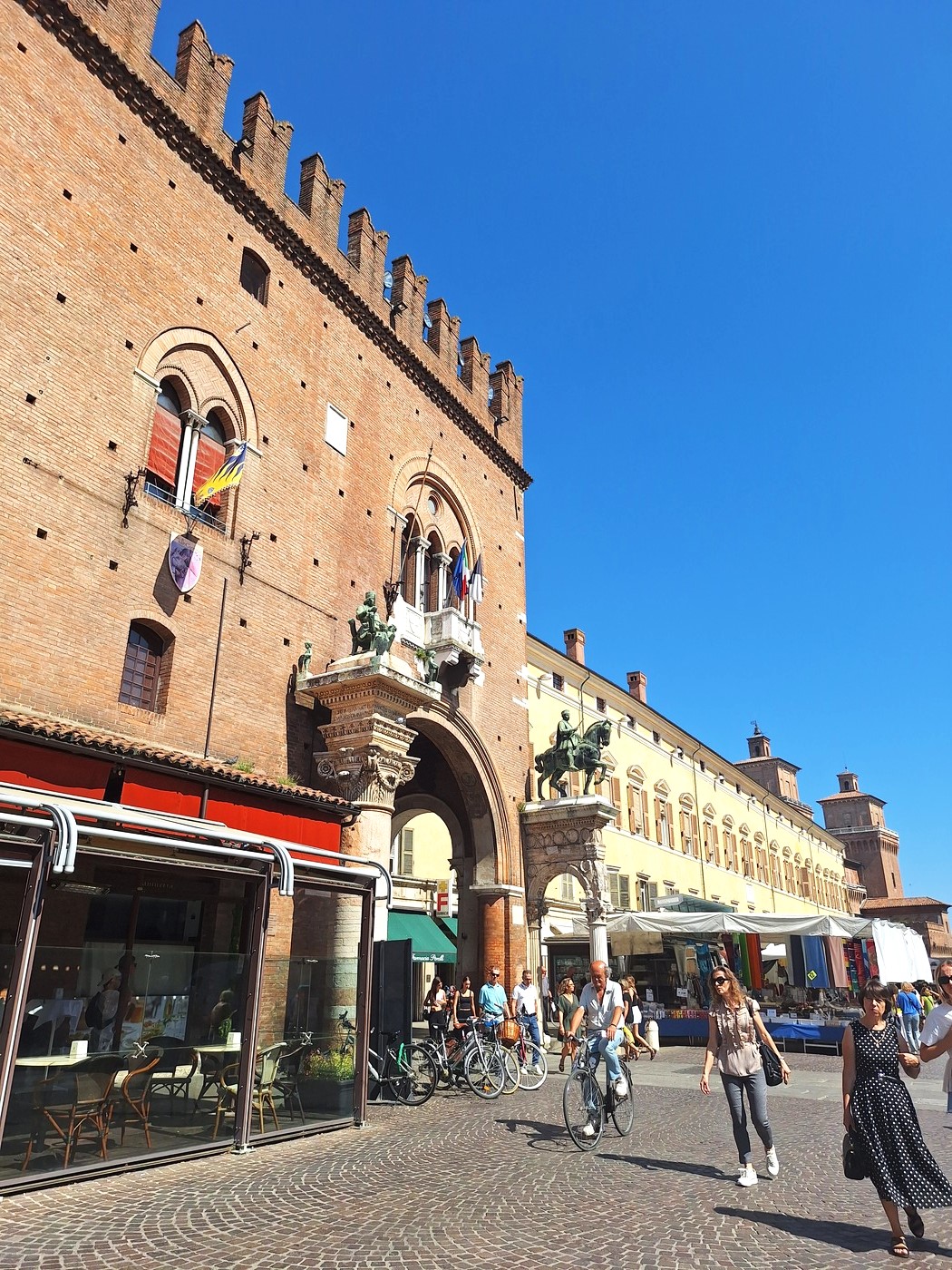
No visit to Ferrara is complete without stepping into Piazza Trento e Trieste, the city’s grand main square. Surrounded by monumental landmarks, it is a living tapestry of Ferrara’s history:
- the awe-inspiring Cathedral of San Giorgio,
- the formidable Palazzo della Ragione,
- the elegant Torre della Vittoria,
- and my personal favourite — the Palazzo Municipale, with its Gothic and Renaissance flourishes and crenelated façade.
Fortress on the water
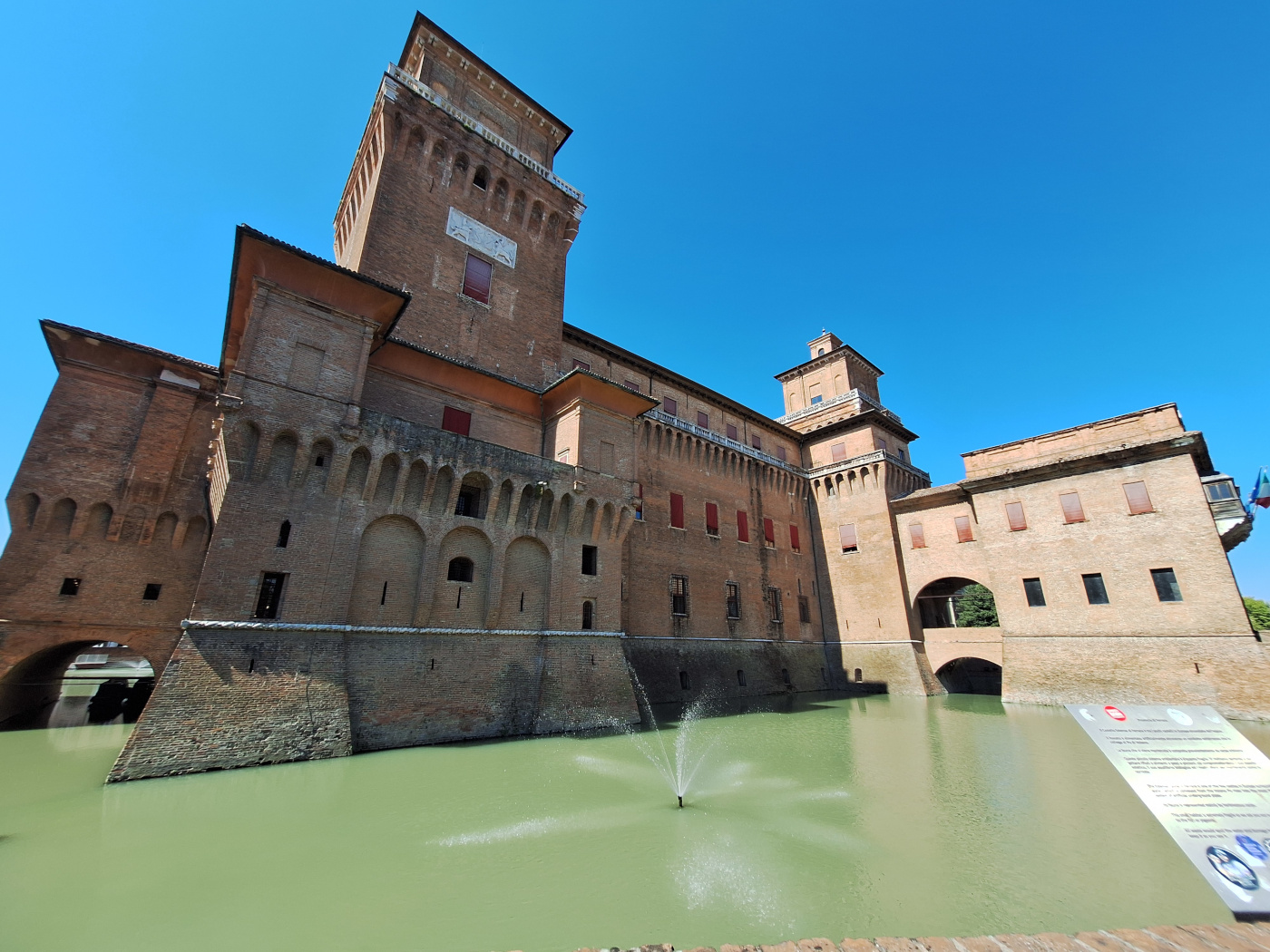
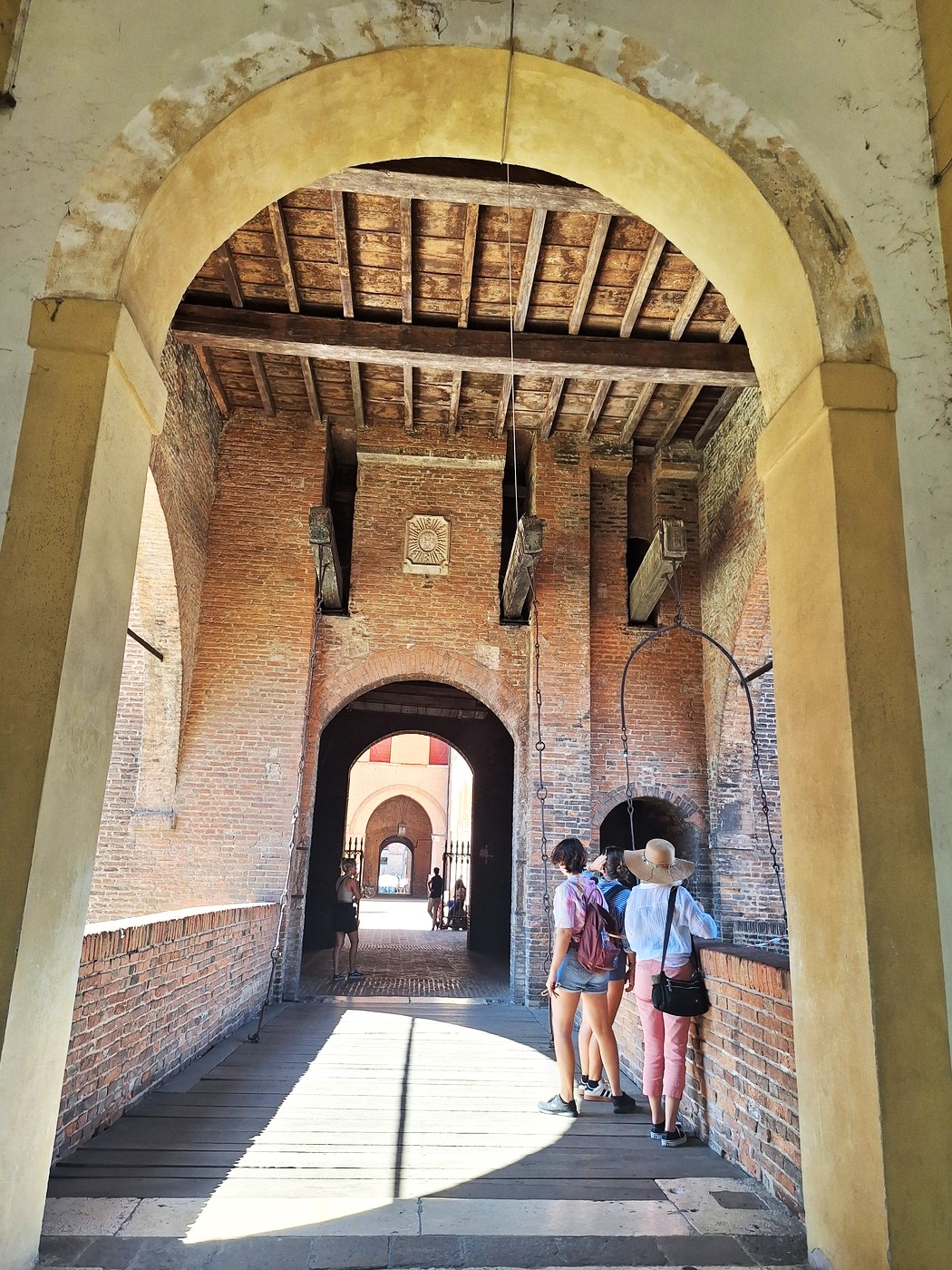
A short walk led us to Estense Castle (Castello Estense), a fortress born out of revolt in 1385. Massive and commanding, it is surrounded by a wide moat — one of the rare castles in Europe still encircled by water. The moat, fed by the Po di Volano river through underground pipes, is home to grass carp that glide gracefully beneath the surface. Once a war machine, the castle now exudes serenity, its reflection shimmering in the water. Inside, visitors can explore a museum, grand chambers, and even the chilling old prisons.
As we strolled along this elegant boulevard, we were captivated by its many historic palaces. Two especially caught our attention:
- Palazzo Gulinelli, marked by a plaque commemorating the meeting of Ettore Bugatti and Conti Gulinelli in 1900 — the spark that ignited the legendary Bugatti car brand.
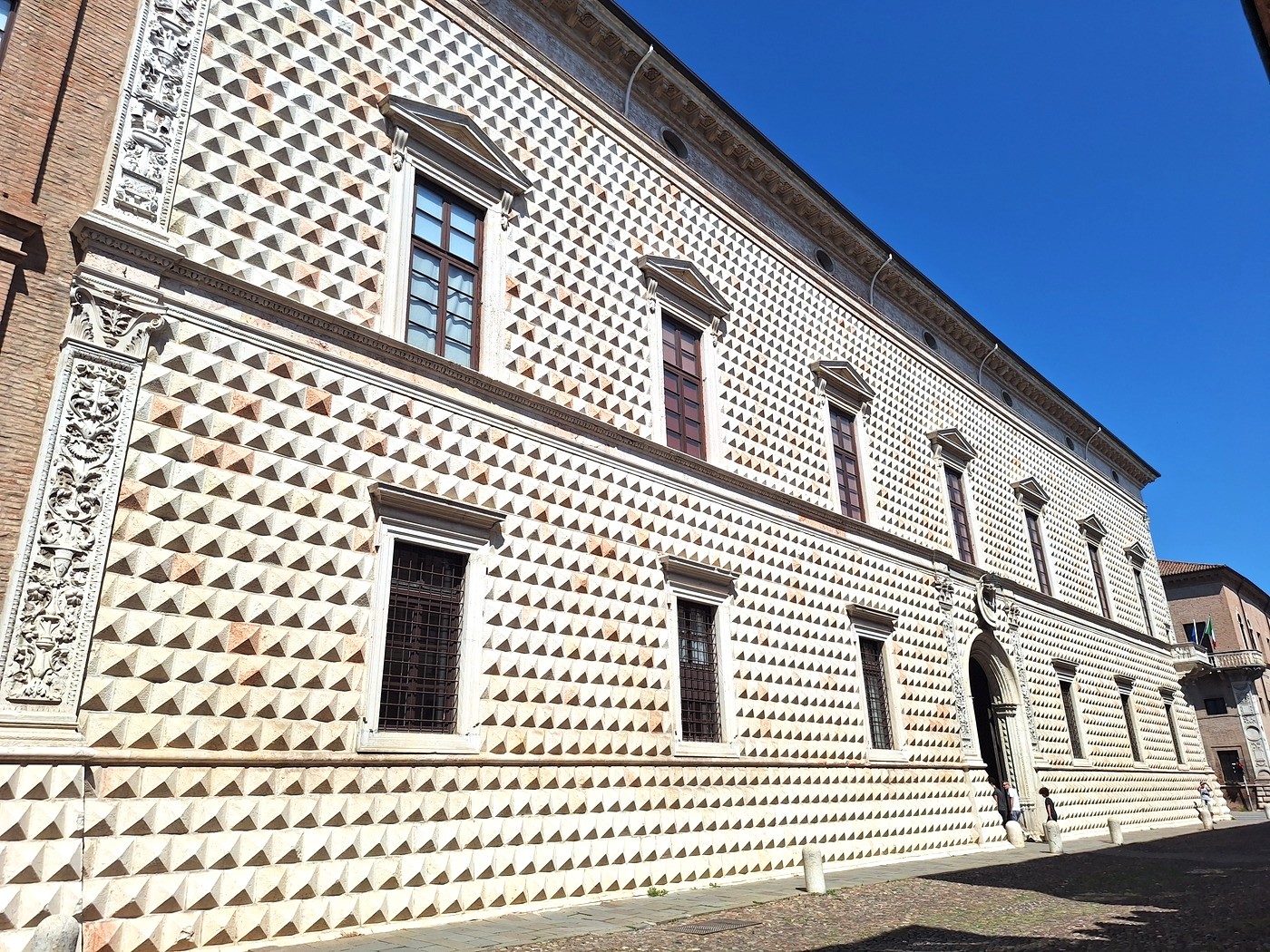
- Palazzo dei Diamanti, a true gem of Renaissance architecture, clad in more than 8,000 pink and white marble “diamonds.” Though we didn’t step inside, the palace houses both a national art gallery and a modern art museum.
Even with only a short time in Ferrara, we didn’t want to miss its green side. Along Corso Porta Mare, directly opposite one another, stand two inviting oases:
- Massari Park, the largest public garden inside the city walls. Covering four hectares, it offers shady paths, fountains, and play areas beneath century-old trees — a peaceful spot for families and leisurely strolls.
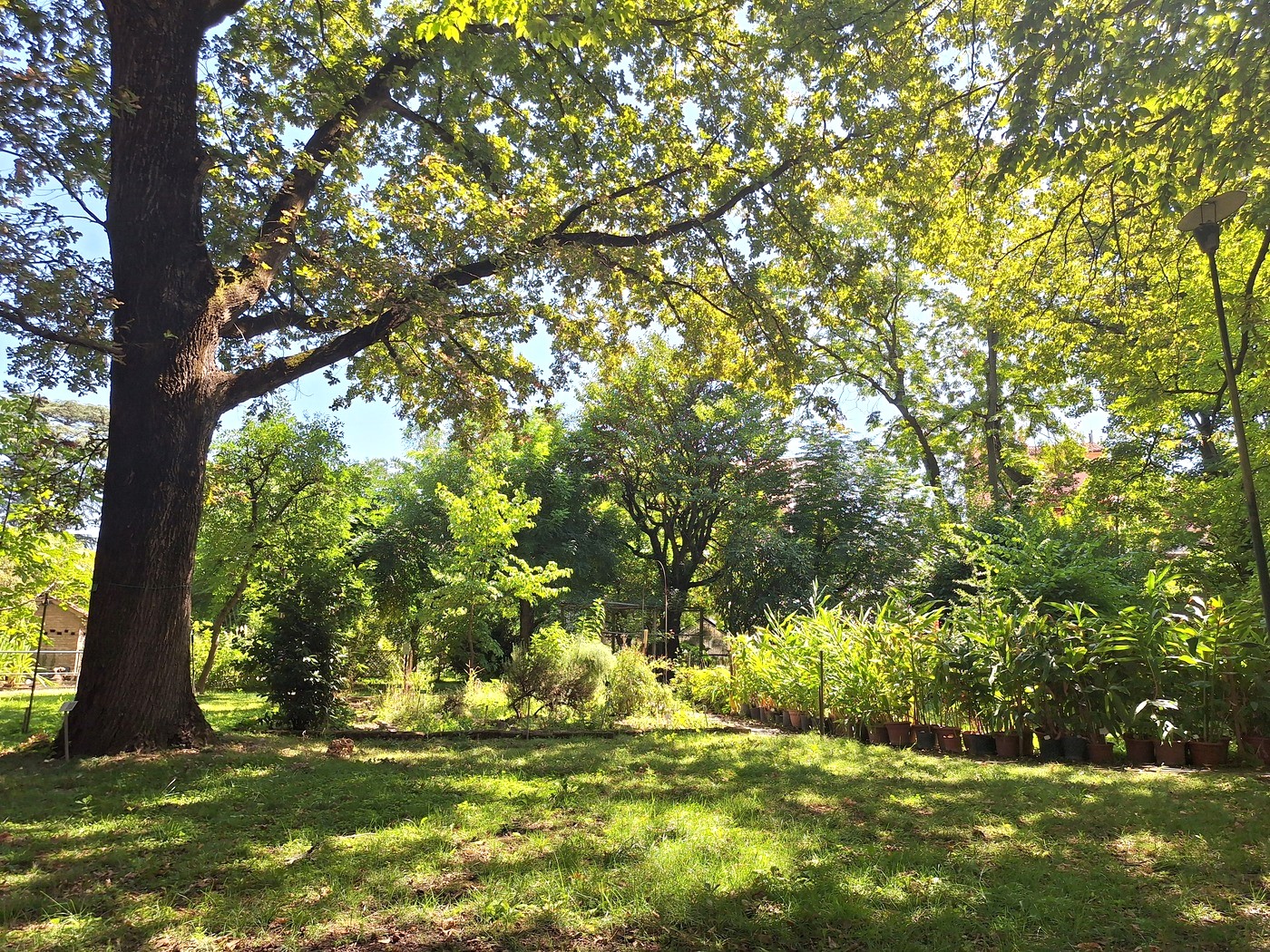
- The Botanical Garden of the University of Ferrara, set within the courtyard of Palazzo Turchi di Bagno. Spanning 4,500 square meters, it shelters over 2,000 plant species, making it both a serene escape and a place of discovery.
We chose to explore the botanical garden, and it was the perfect choice — peaceful, educational, and lush with greenery. Wandering among its rare plants felt like a refreshing pause before heading back on the road.
Though our visit lasted only a few hours, Ferrara left a strong impression. With its medieval streets, Renaissance palaces, and hidden gardens, the city reveals a timeless elegance that makes even a brief stop worthwhile. Smaller than Bologna yet rich in history and beauty, Ferrara is the kind of place that lingers with you long after you leave.
Comacchio
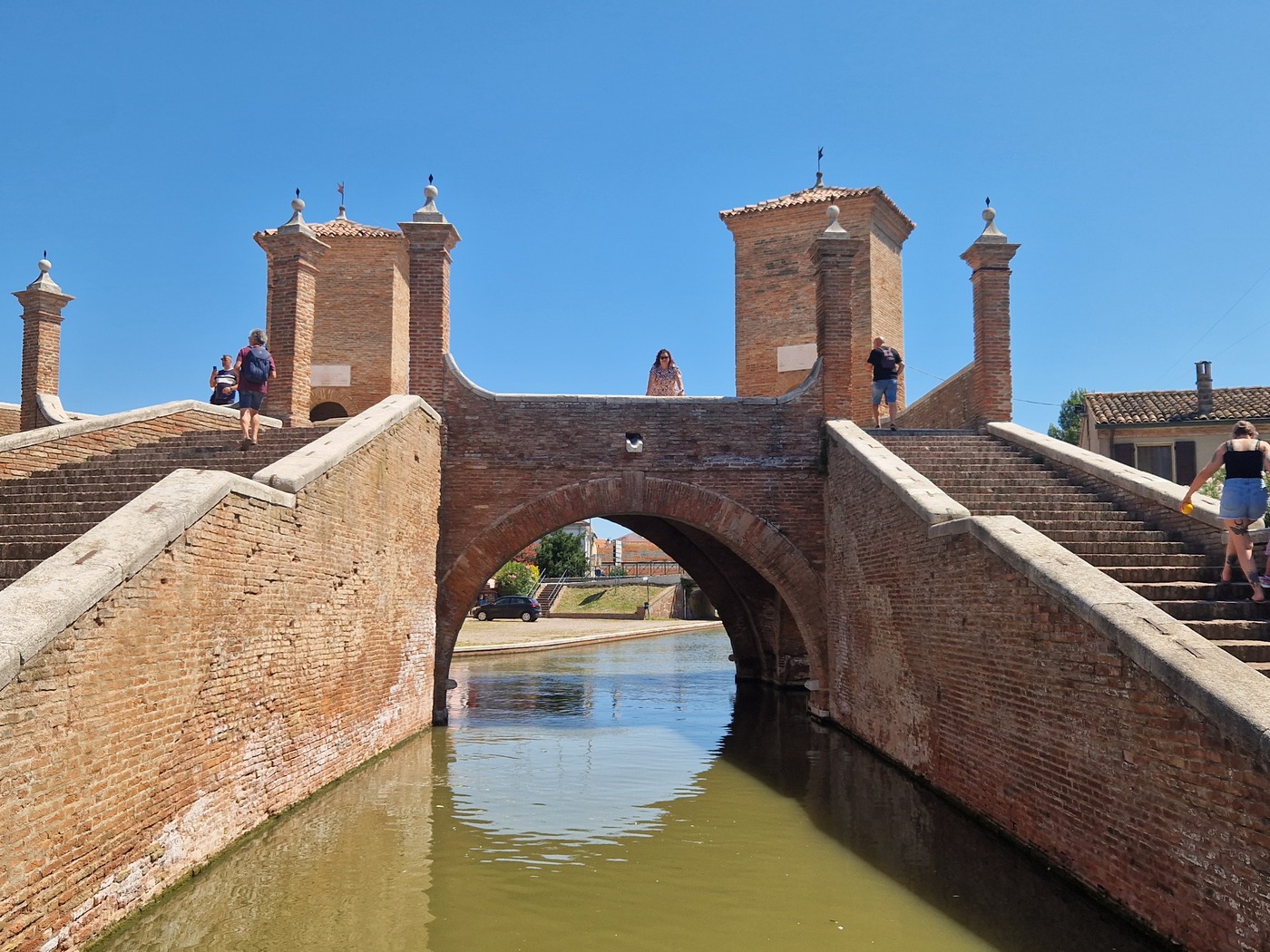
About an hour from Ferrara, we headed to Comacchio — a hidden gem often called Italy’s ‘Little Venice’. It’s a lagoon town laced with canals, rows of cheerfully coloured houses, and charming bridges, but without the tourist crowds of its famous cousin.
First steps into Comacchio
We left the car at Parcheggio Largo Card. Pallotta, a handy parking spot just steps away from the town’s most iconic landmark — Ponte dei Trepponti, or the bridge of three bridges. Don’t be fooled by the name though! This 17th-century structure actually boasts five bridges, three at the front and two tucked away at the back. Once a fortified gateway for sailors arriving from the sea, it even had watchtowers added later on. Today, it’s the proud symbol of Comacchio and the perfect starting point to wander into the old centre of the town.
Along the canals
We visited in August, under a blazing summer sun — the kind that makes you slow down your steps and take in the details around you. The streets run directly beside the canals, offering glimpses of daily life in this charming town. Along the way, two landmarks stood out:
- Palazzo Bellini: a graceful 19th-century residence, now home to the municipal cultural councillorship, a library, and temporary exhibitions.
- Museo Delta Antico: just across Palazzo Bellini, housed within the imposing neoclassical architecture of the 18th-century Hospital of the Infirm — one of the most important and monumental buildings in Comacchio’s centre. Inside, visitors discover archaeological treasures from an ancient Roman shipwreck found nearby, along with exhibits that trace the history of the Po Delta and the town’s enduring relationship with its lagoon.
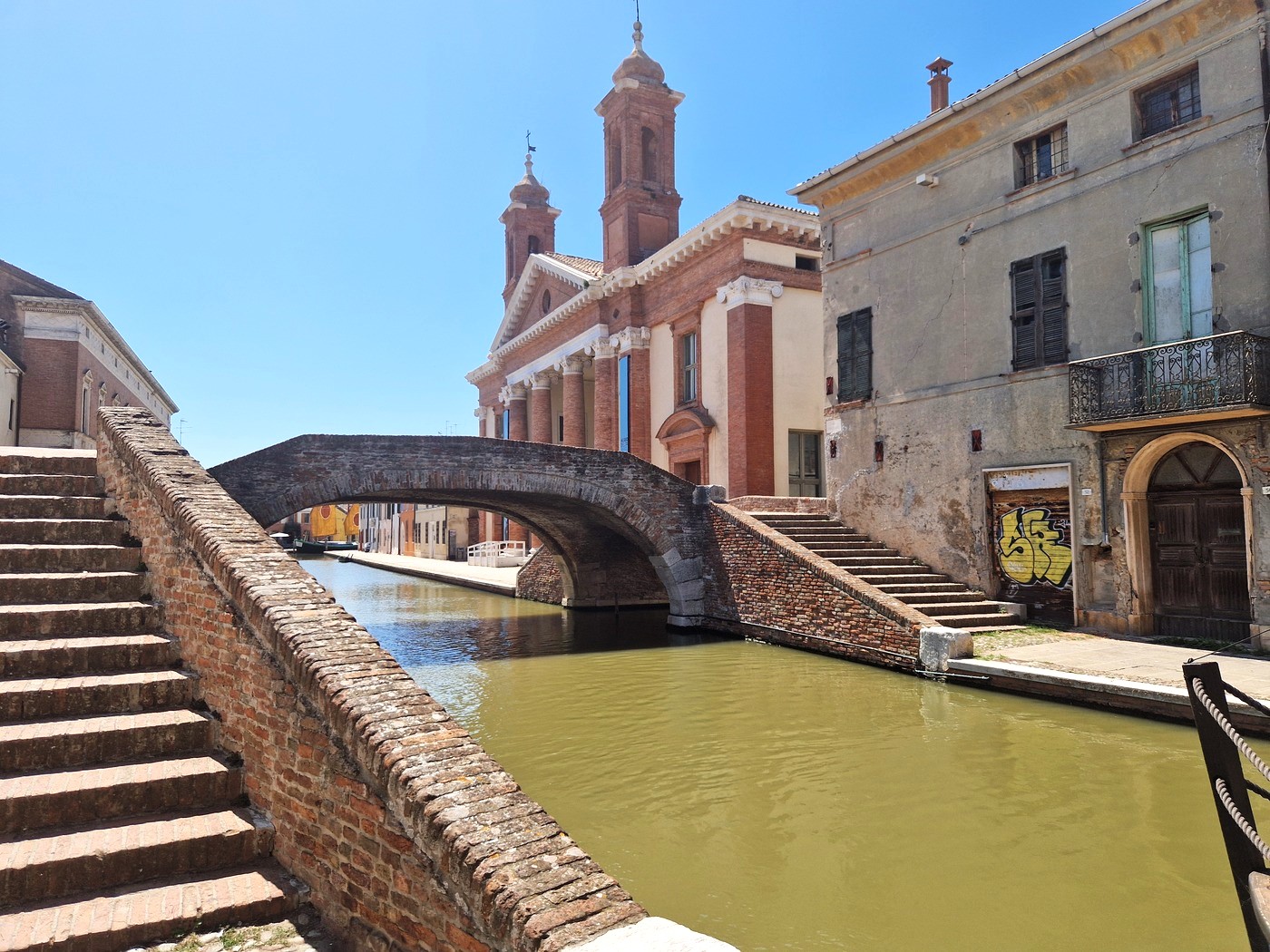
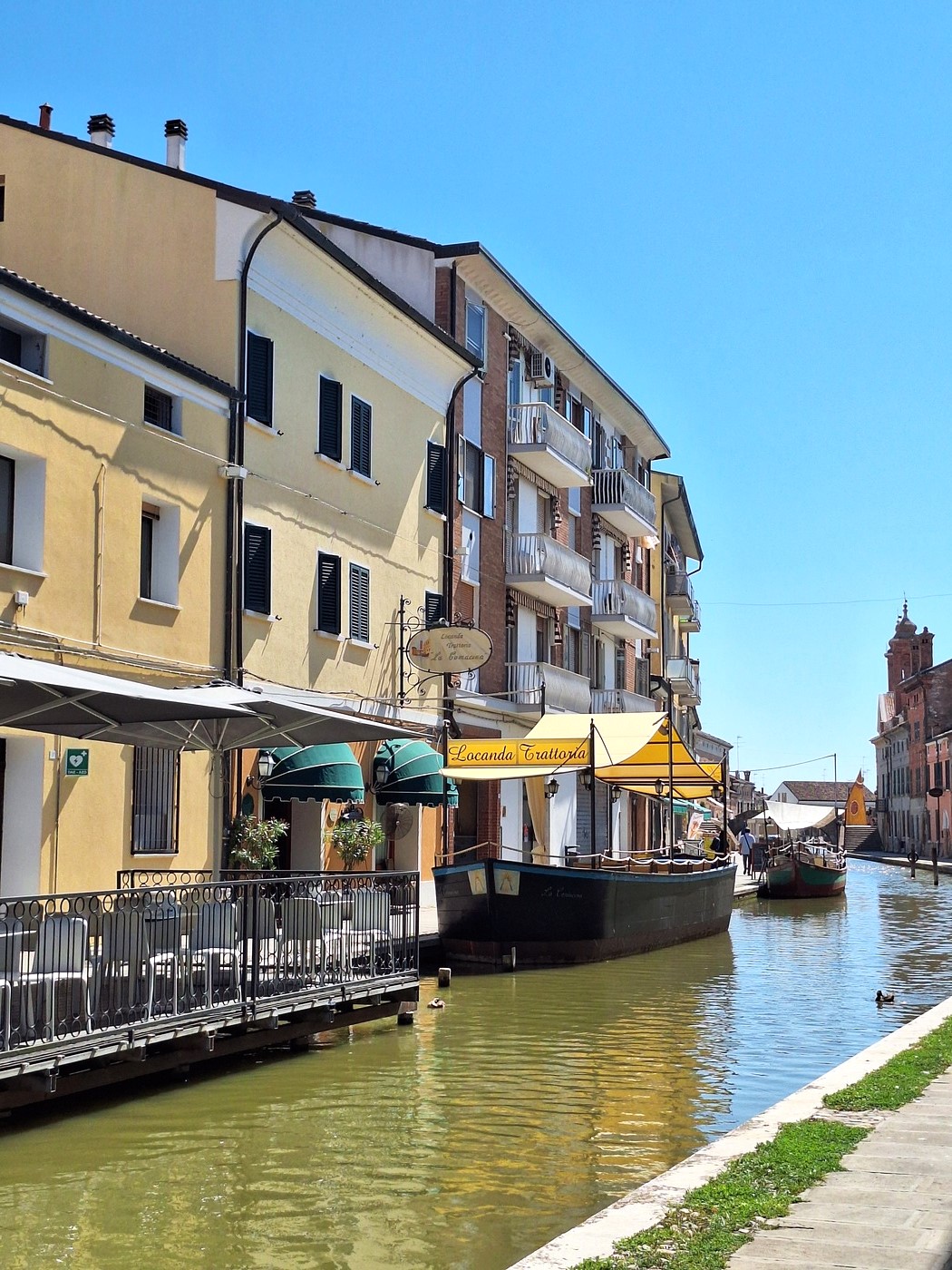
Along the canals, quirky restaurants offer tables set up on boats moored to the water — an enchanting way to dine. We resisted the temptation this time, saving our appetite for a particular trattoria, but it’s worth knowing there are also plenty of gelaterias, serving creamy scoops in every flavour imaginable.
Piazza XX Settembre & the Cathedral
Our walk eventually led us to Piazza XX Settembre, the heart of Comacchio. The square is dominated by the Basilica of San Cassiano, the town’s cathedral dedicated to its patron saint. From the outside it looks imposing, yet step inside and the space feels serene and understated, adorned with just a few precious works of art.
The bell tower, however, tells its own story. Strikingly short compared to the church, it owes its modest height to local legend: when the original tower collapsed shortly after construction, the townsfolk rebuilt it lower, believing it wiser not to challenge God’s will a second time.
A taste of the lagoon
Right across from the Cathedral, we found the restaurant we were looking for: Antica Trattoria La Barcaccia, a Travellers’ Choice favourite celebrated by locals. Inside, the warm traditional décor set the mood for what became one of our most memorable meals in Emilia-Romagna.
- I ordered the squid — tender and buttery, melting in my mouth.
- My husband went for octopus — which he still insists was one of the best dishes he’s ever had.
- The house specialty is eel, caught fresh from Comacchio’s lagoon — a must for seafood enthusiasts.
If you have more time
Our visit ended here as we moved on to our next destination, but if you have more time, don’t miss the Po Delta Regional Park, just outside town. Boat rides through the marshes and salt flats reveal a rich natural world where flamingos, herons, cormorants, and more — a paradise for birdwatchers and nature lovers.
Dozza
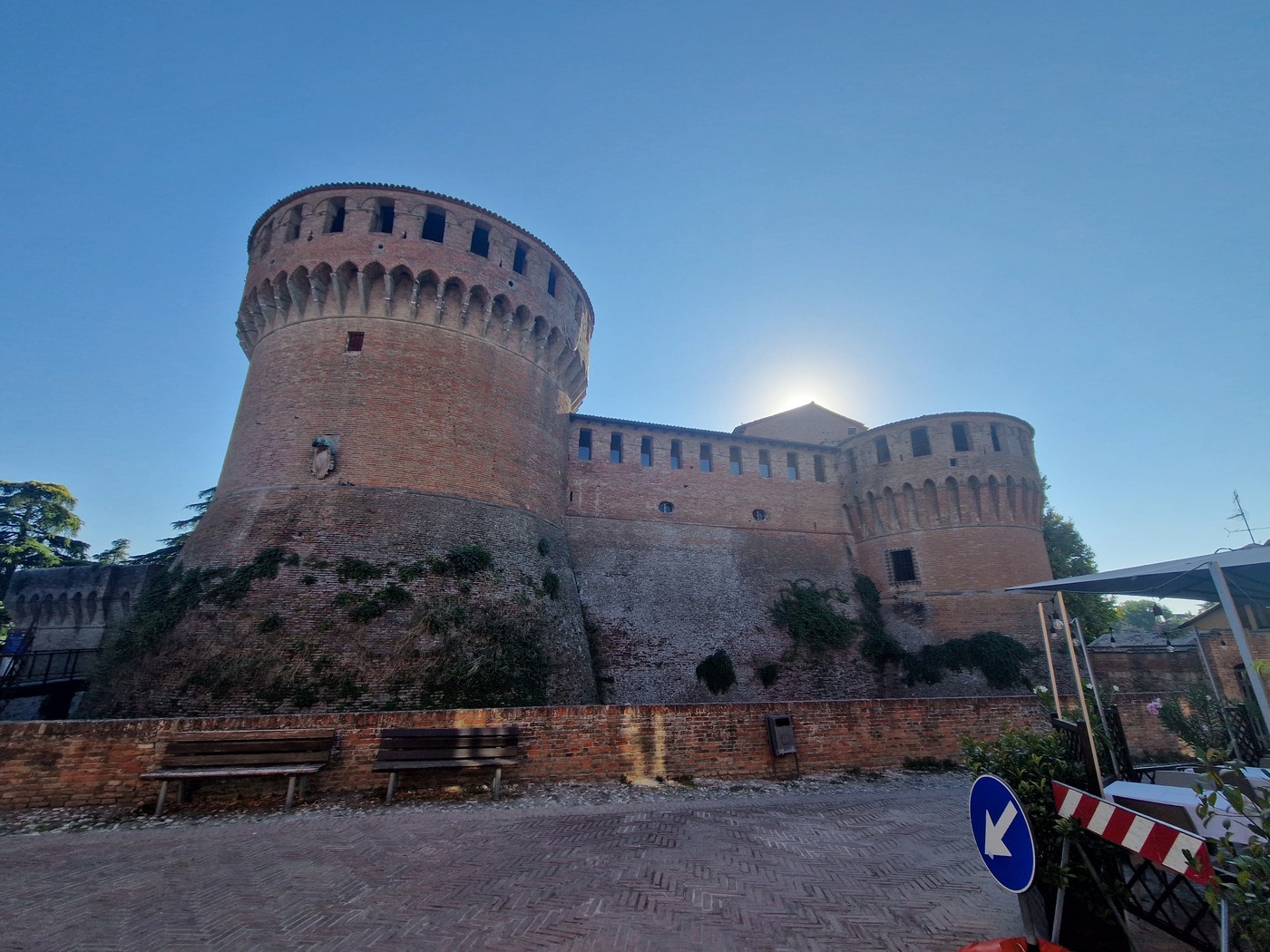
Our last stop of the day was the medieval village of Dozza, about an hour and a half’s drive from Comacchio. Small, quiet, and set against the rolling countryside, it welcomed us with streets that seemed to whisper stories through their painted walls.
Murals that spoke to us
Dozza is famous for its Festival of the Painted Wall, held every two years in September. During the event, artists from Italy and abroad paint directly onto the houses, transforming the village into a living canvas.
We didn’t visit during the festival, but the streets were still full of art. Around a hundred murals brightened the lanes and squares, some stretching across entire façades, others smaller in scale, yet all very visible. Each one carried a name, a date, and the signature of its artist.
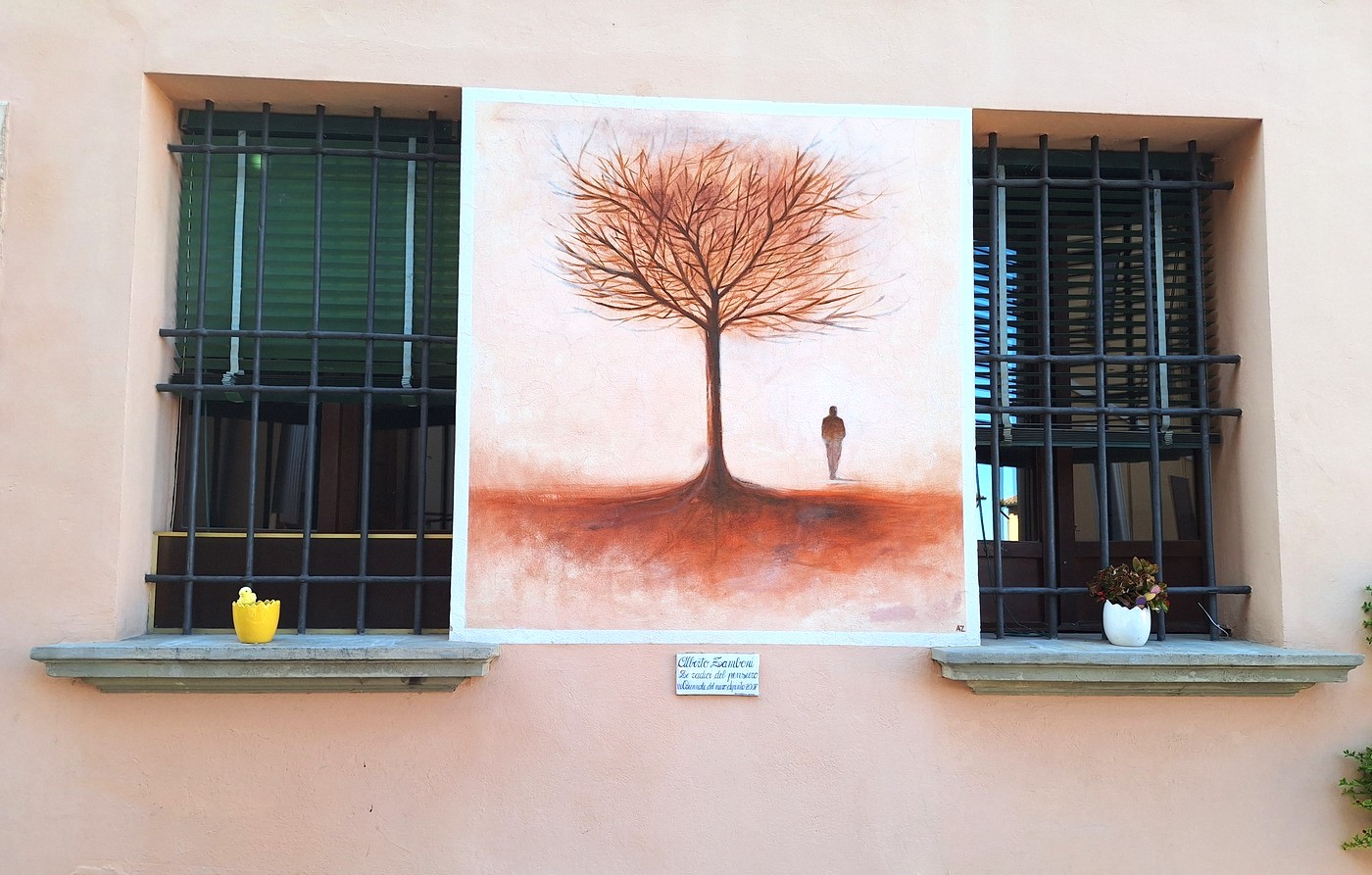
We walked slowly, pausing again and again. Some murals made us smile, others made us think, and a few were already fading, their colours softened by wind and rain. The tradition of painted walls in Dozza date back to the 1960s.
This experience also reminded us of our time in Orgosolo, Sardinia, where the walls were covered with powerful political murals.
A 15th-century church
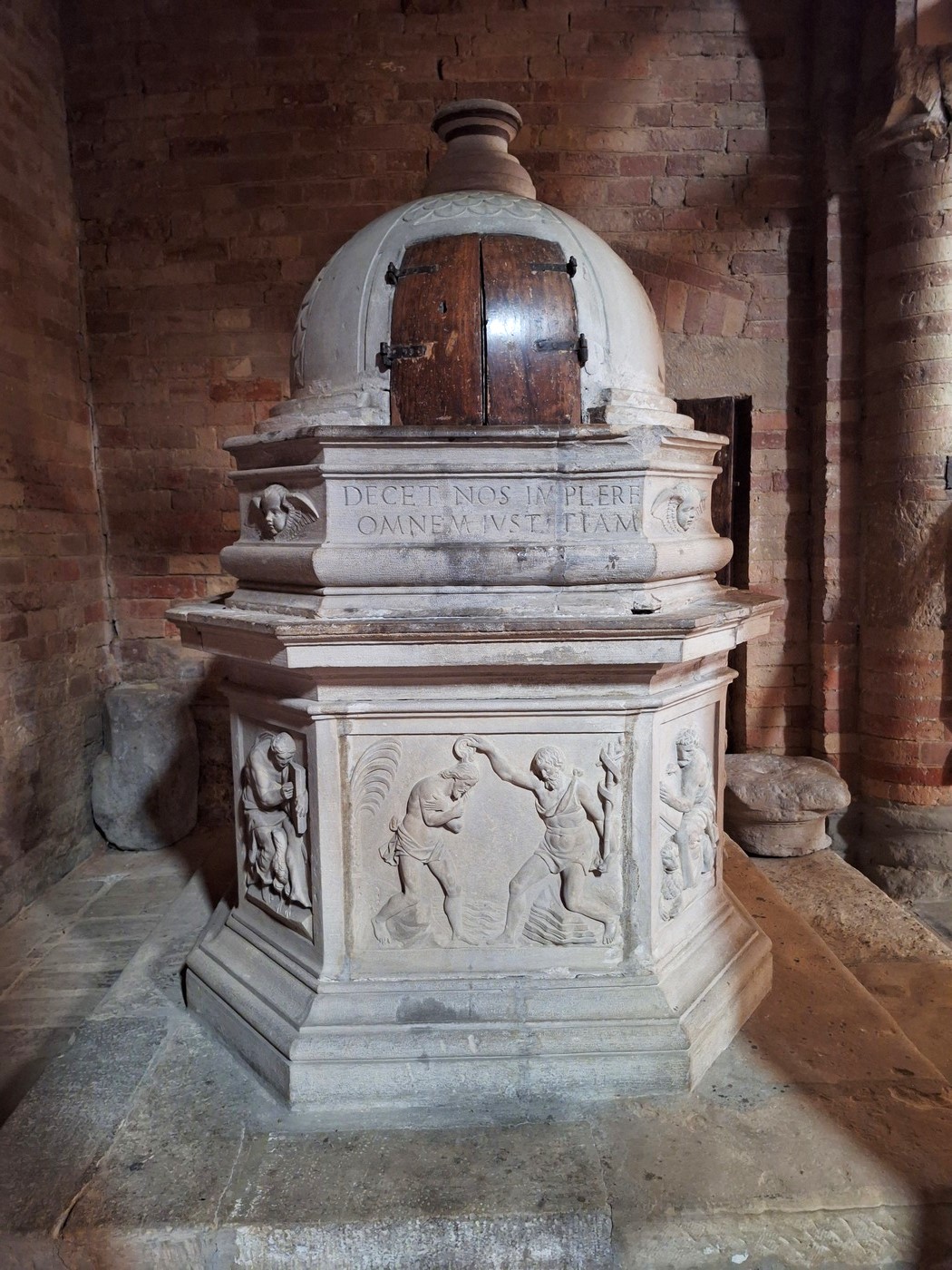
On Via XX Settembre, we stepped into the Church of St Mary of the Assumption. Modest from the outside, it revealed its treasures once inside.
What caught our eye immediately was the great 16th-century baptismal font, carved with the four Evangelists and biblical scenes in detailed relief. The church itself had been built in the late 15th century on the site of an earlier chapel, its Renaissance style still clear in its lines and atmosphere. Standing there, we could sense the many layers of faith and time held in those walls.
It sat opposite the Town Hall, quietly marking the road that led upwards to the Rocca.
The fortress and its wine cellar
At the top of the street, the Rocca of Dozza rose in front of us — a fortress of red brick with towers and battlements still intact. Its heavy entrance seemed to guard centuries of memories, and we couldn’t help but wonder who had once walked through those gates during times of war.
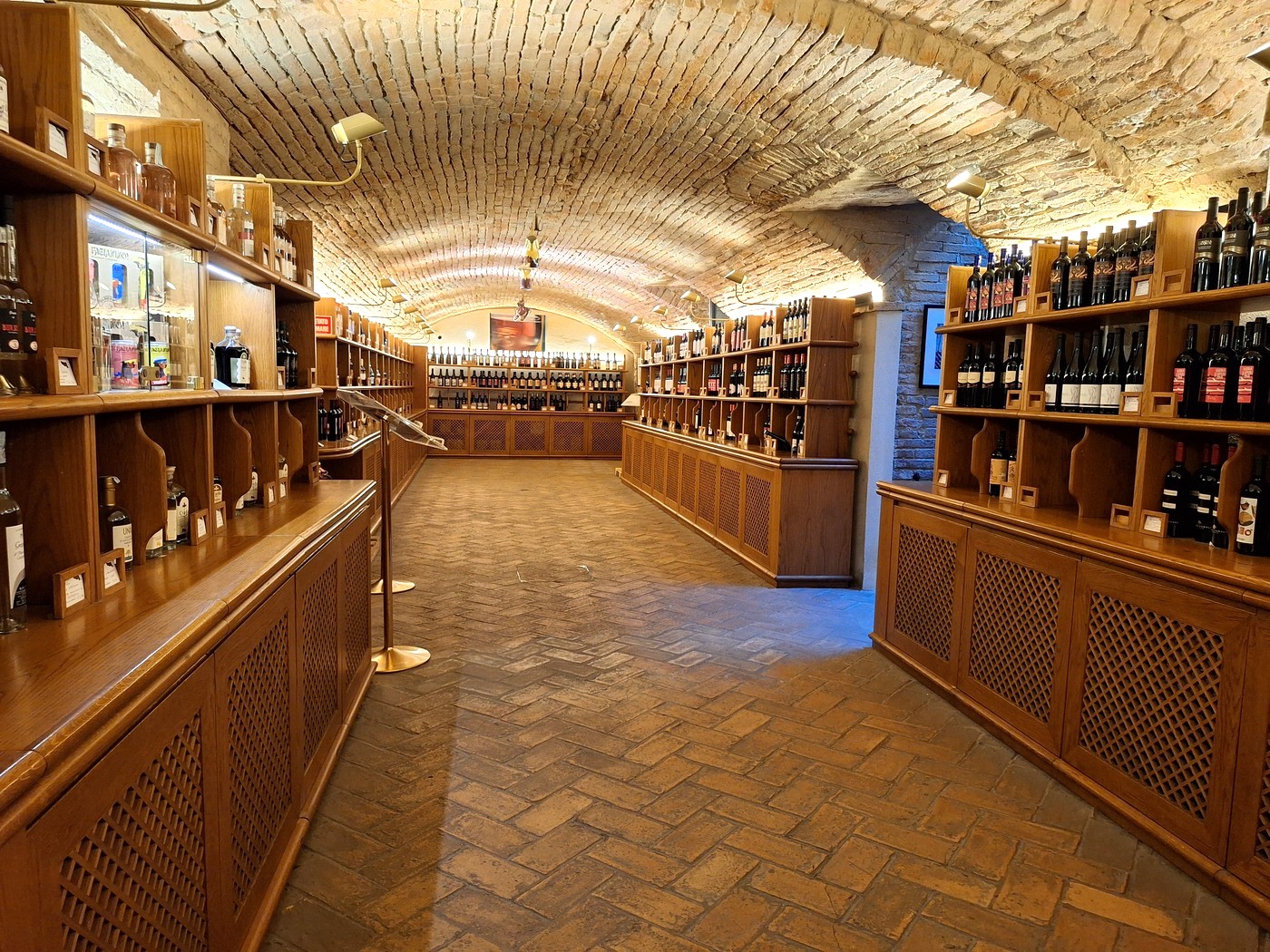
Inside, the fortress revealed an unexpected heart. Its cellars had been transformed into the Enoteca Regionale Emilia-Romagna, a library of wine. Bottle after bottle, rows of labels told the story of the region: its vineyards, its families, its soil. It felt almost surreal to be surrounded by so much history above and so much richness of flavour below.
In the end, we carried away a bottle of Monte del Re from the Assirelli Winery. It followed us for days until we finally opened it at Weltenburg Abbey in Germany, making the memory of Dozza travel with us. For anyone planning a visit, the enoteca is closed on Mondays.
Dozza in the afternoon
Dozza was very quiet in the afternoon. Shops and restaurants were closed, so there wasn’t much going on, but the silence gave the village a different charm. In the end, we returned to our hotel in Bologna, a drive of about 45 minutes.
Bologna
Our hotel in Bologna
We stayed in Bologna because our flight landed there, and it proved to be a very practical starting point for exploring nearby towns. Our home for the night was the NH Bologna de la Gare, a 4-star hotel just a few minutes’ walk from the train station. Its location was excellent — close to the airport connections, the station, and also within easy reach of Bologna’s shops, restaurants, and main attractions. The staff were friendly, and the hotel was comfortable, making our short stay easy and convenient.
Day trips from Bologna
The morning after we planned to visit three places: the elegant city of Ferrara, the lagoon town of Comacchio, and the medieval village of Dozza. To make the most of our time, we rented a car from Autovia, collecting it from Garage Stazione Centrale, just a short walk from our hotel. The garage is not only a rental pick-up spot but also a handy parking facility if you arrive with your own car. Having Bologna as our base made these excursions practical and stress-free
An evening in the city
Since our day was filled with travel, we only spent one evening in Bologna. After returning the car, we took a walk through the centre. The city was full of people, creating a pleasant and welcoming atmosphere. At Piazza Maggiore, we came across a large open-air film screening. Each summer, from mid-June to mid-August, the event “Sotto le stelle del Cinema” (Under the Stars of Cinema) takes place here, offering free nightly screenings in the square. That evening, an Italian film was playing, and we paused for a moment to watch before continuing our walk.
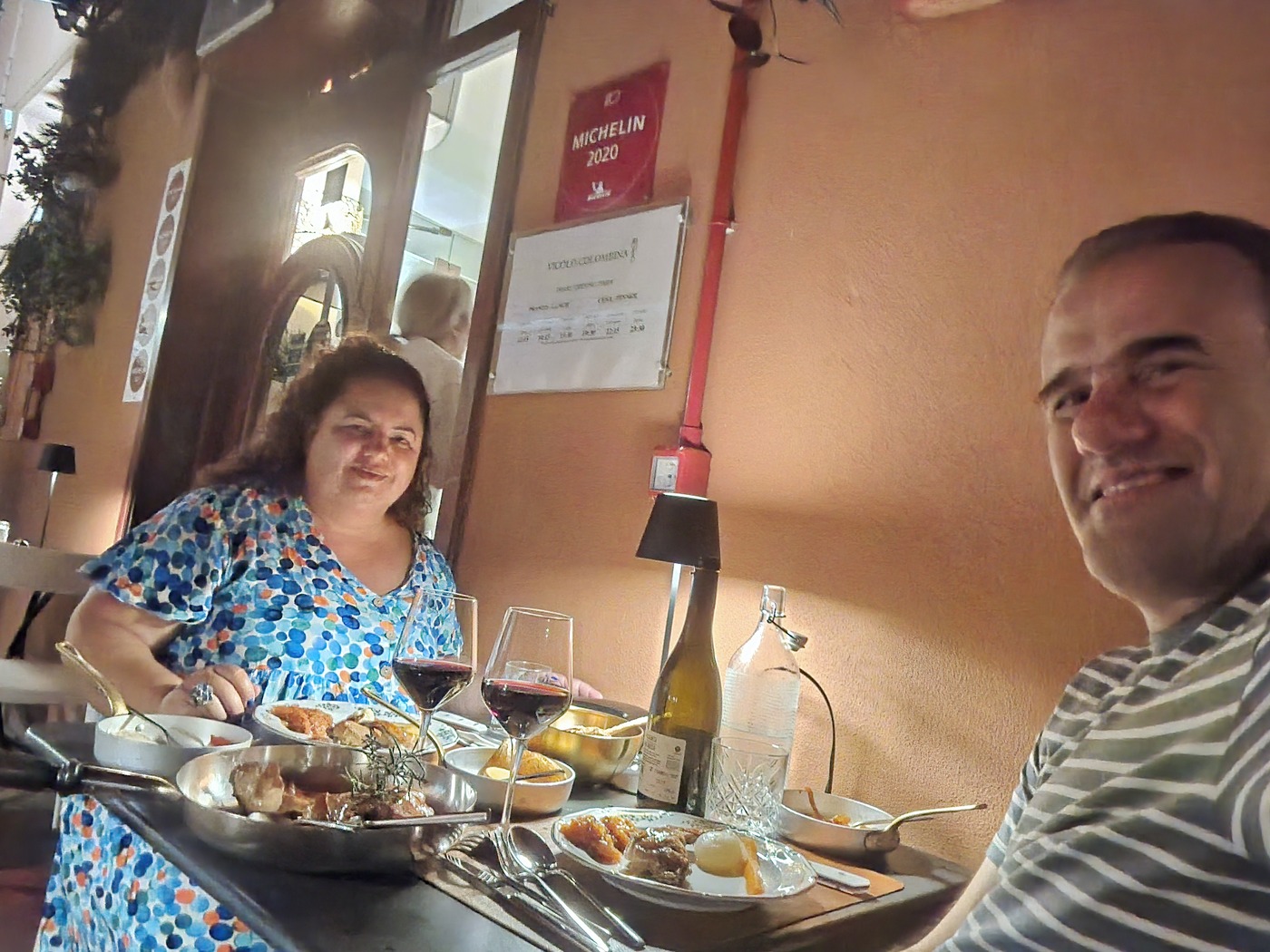
For dinner, we chose Vicolo Colombina, a restaurant listed in the Michelin Guide. Tucked away in one of the narrow alleyways of the historic centre, just steps from Piazza Maggiore, it offered an atmosphere that was both intimate and cosy. We both savoured the traditional roasted rabbit, a specialty that melted in our mouths. It was prepared in a way so distinct from how we cook rabbit in Malta — where the dish is among the most beloved on our islands — that it felt like a delightful rediscovery of a familiar flavour. The meal, accompanied by a glass of Bologna wine, was an excellent way to spend our only evening in the city.
Onward to Innsbruck
The next morning, we had an early train to catch to Innsbruck, Austria, where we would be staying in Wilten. The proximity of the hotel to the station was a real advantage. Since there was no time for breakfast at the hotel, we stopped at Venchi, just outside the train station, for tea, coffee, and a cornetto. Then we boarded our train for a journey of around five hours — time to read, eat, enjoy the scenery, and rest before arriving in Innsbruck.