Welcome to my fourth part of a five-part story covering our 10-day train Journey from Italy, through Austria and Czechia to Germany
Arrival in the city
We began our journey from Innsbruck’s main train station, riding first to Linz and then onward to České Budějovice. The trip took about six and a half hours, and by the time we arrived in the afternoon, we were ready to stretch our legs. The 15-minute walk from the station to our hotel was already a delight — the city immediately charmed us with its elegant architecture, flat and walkable streets, and the noticeable absence of tourist crowds.
On our way, we encountered some captivating public art. One piece that stood out was Humanoids, a sculpture by Czech artist Michal Trpák, created between 2006 and 2007. The installation shows eight life-sized figures in motion, cast from fibreglass cement. Its message is powerful — a reflection on whether people truly shape their own lives or merely play the roles assigned to them by society and media influence.
Staying in the historic centre
Our home for this stay was Residence U Černé věže, where four carefully renovated historic houses in the very heart of České Budějovice have been transformed into stylish apartments. Each unit is individually designed, preserving original architectural details while providing all the comforts of a four-star stay. Particularly the living room was spacious, full of light, and rich in character. Just steps from the Black Tower and only a two-minute walk from Přemysl Otakar II Square, the location was ideal for exploring the city.
A floating café and river cruise
After settling in, we walked to Kavárna VLNNA, a floating café on a branch of the Malše River. It took us about 15 minutes to reach it on foot. Located on Sokolský ostrov (Sokol Island), this café feels like a little escape into greenery and water, despite being so close to the city centre. On our way there, we came across Merging, another striking sculpture by Michal Trpák placed directly in the Malše. Created using 3D concrete printing and installed in 2025, it represents harmony with the flow of water and invites passersby to pause, reconnect with nature, and reflect on life’s fleeting quality.
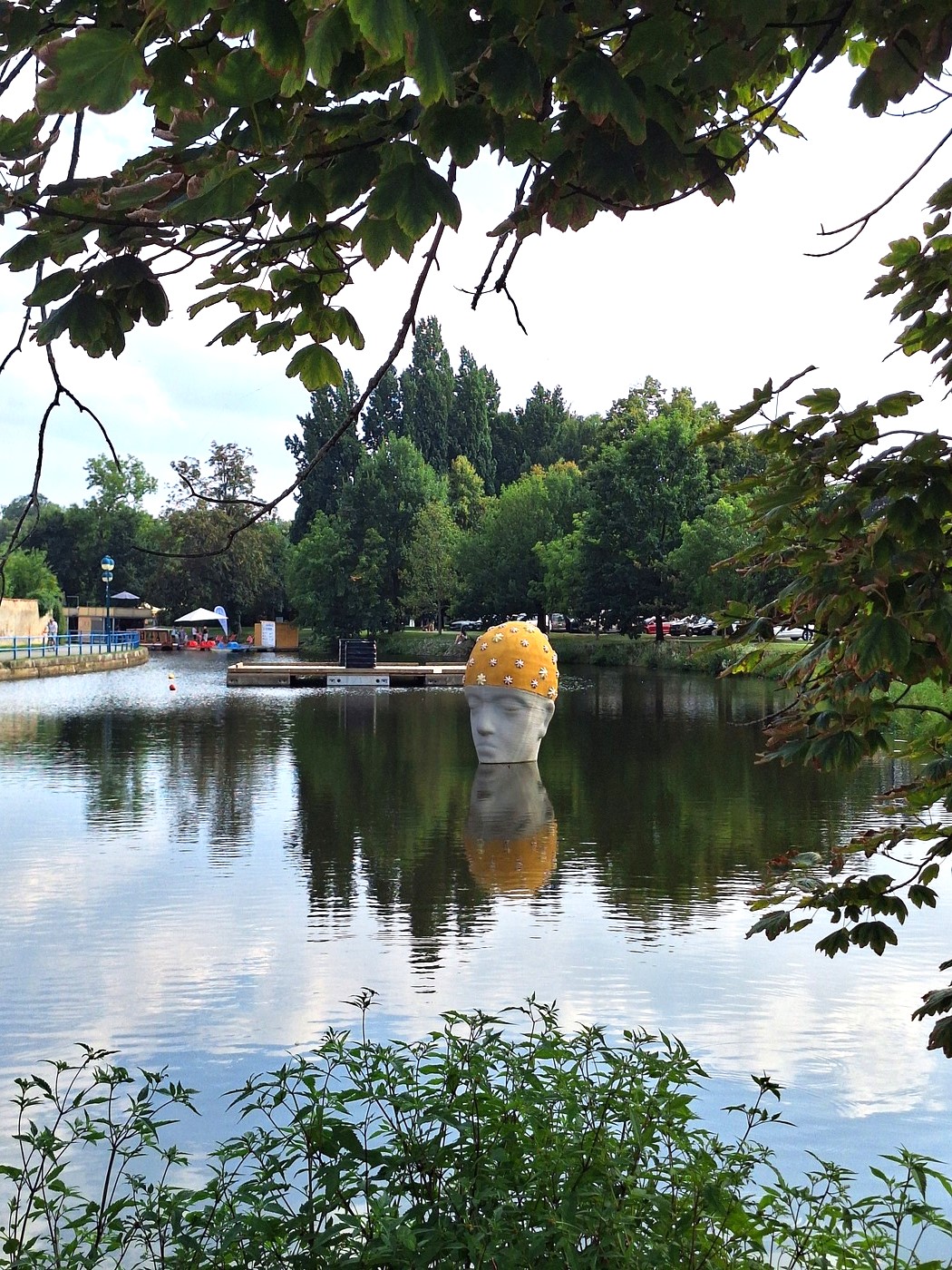
The café itself offers more than coffee: you can rent pedal boats, paddle boards, and rowboats, or, as we did, take a scenic river cruise. We boarded the wooden boat St Rozálie, which carries up to 12 passengers. The 40-minute journey was serene and romantic, drifting past the preserved city walls, towers, and bastions, under five interesting bridges, and through the confluence of the Malše and Vltava rivers. Though the commentary was not in English, the captain provided us with written notes, so we didn’t miss the historical details.

Early dinner by the river
Dinner that late afternoon was just across the red metal bridge from VLNNA, at Potrefená Husa. The restaurant boasts a large terrace with river views, making it an inviting place to pause and recharge. We both opted for fresh pasta, paired with homemade lemonades — one berry, one lemon — which were light, refreshing, and just what we needed.
Evening in Přemysl Otakar II Square
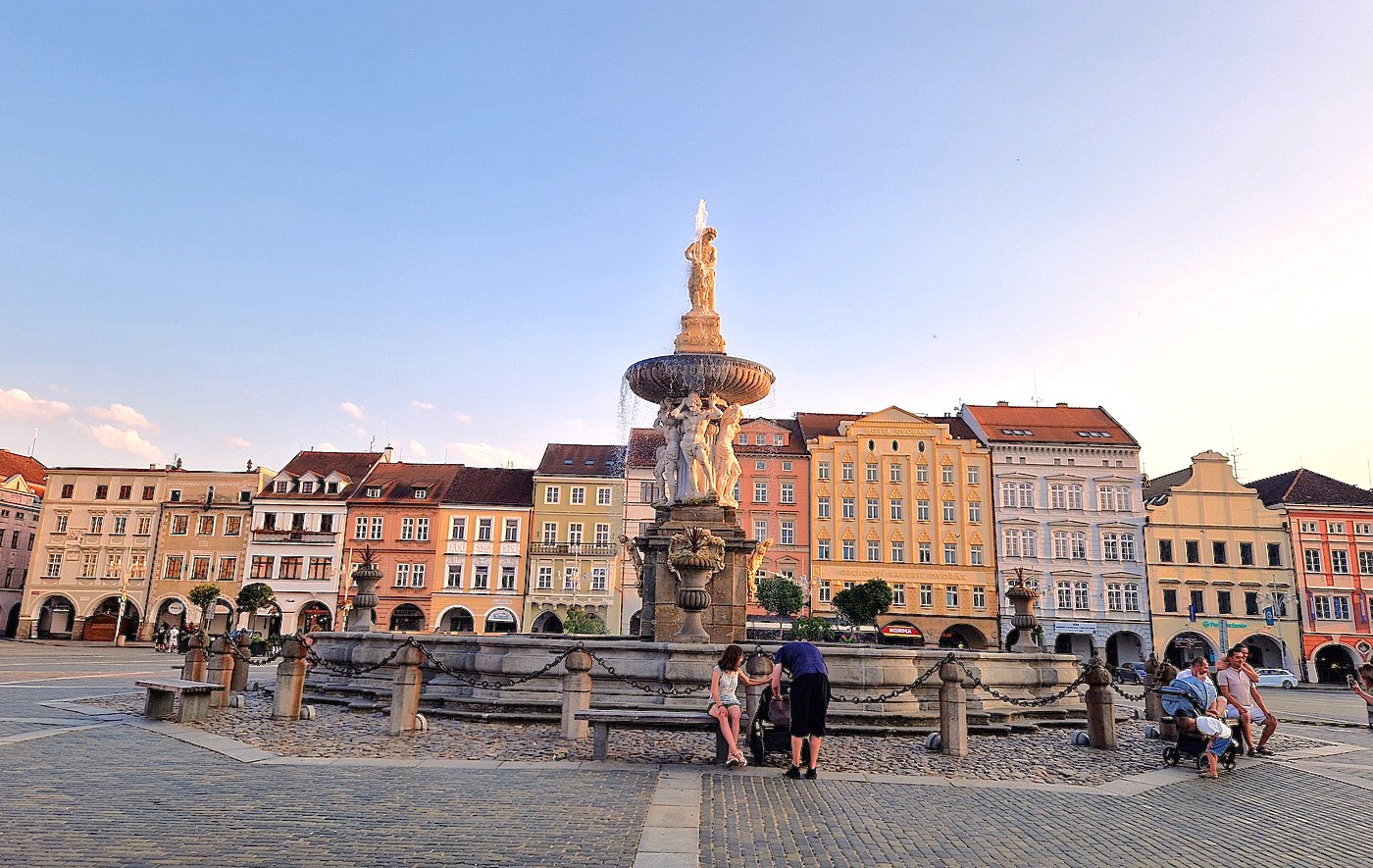
Later, we wandered back toward the city centre. The cobbled streets, lined with Renaissance and Baroque buildings, led us to the magnificent Přemysl Otakar II Square. Measuring exactly 10,000 square meters, it is one of the largest squares in Europe. At its centre stands Samson Fountain, an 18th-century Baroque masterpiece and the largest fountain in the Czech Republic. Originally functional, supplying water to the city from the Vltava, today it remains both beautiful and refreshing, especially in the heat of August.
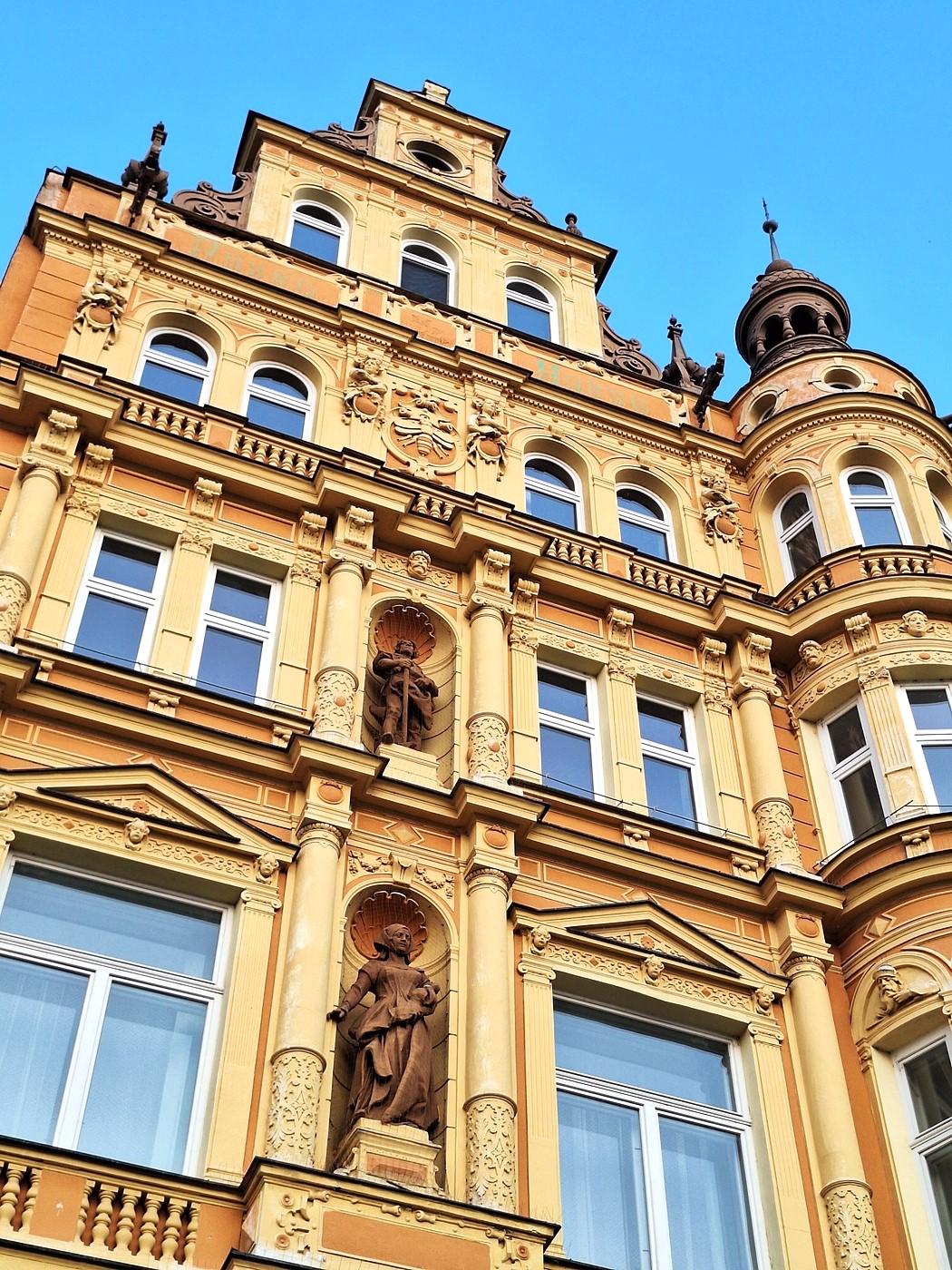
The square is surrounded by pastel-coloured buildings, arcades, and landmarks. The most striking is the City Hall, a Baroque structure with a blue-grey façade, three towers topped with green spires, and allegorical statues representing Justice, Bravery, Wisdom, and Caution. Another building that caught my eye was the Včela Palace. This Neo-Renaissance gem, painted in bold orange and yellow, stands out vividly against the pastel surroundings, its façade richly decorated with stucco and sculpture.
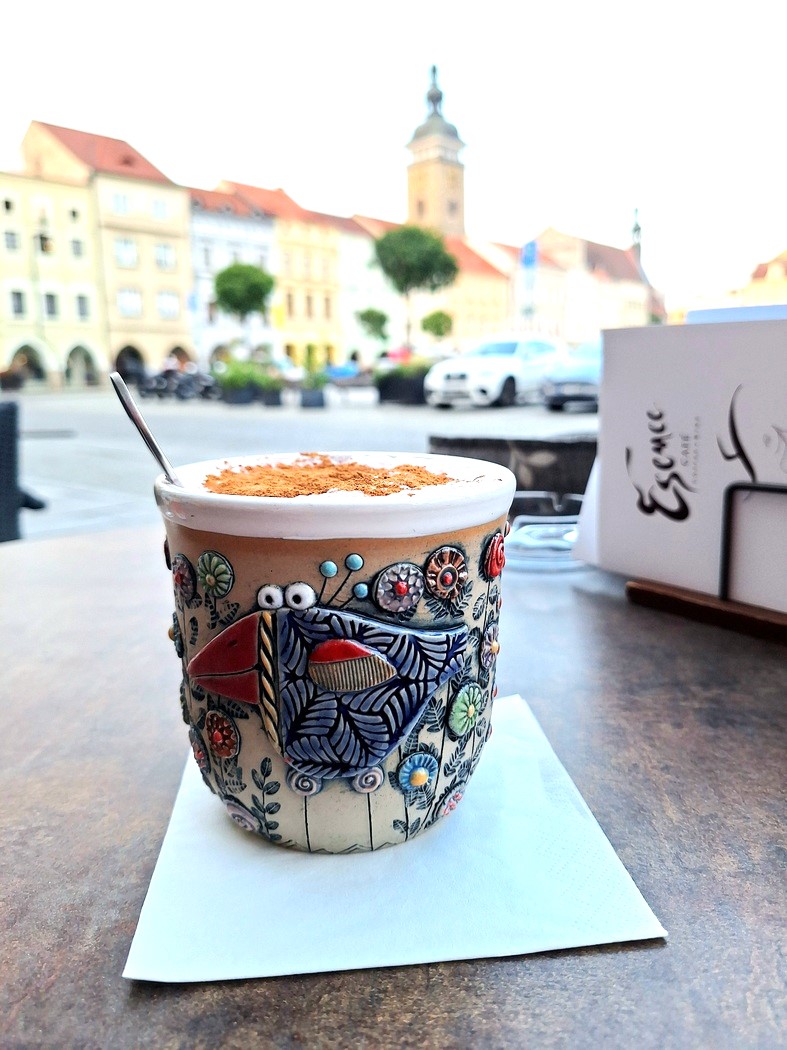
We had planned to climb the Black Tower, visible from our apartment, but fatigue after a long day made the thought of its 225 wooden steps unappealing. That said, if you have the time and energy, it is well worth the effort — the views from the top are said to be truly spectacular, offering a sweeping panorama of České Budějovice and beyond. Instead, we chose a gentler way to end the evening: sitting at Esence Café under the arcades, overlooking the square. With a latte macchiato for me and a Budweiser Budvar for my husband — brewed right here in České Budějovice — we watched the square come alive with chatter, laughter, and children splashing in the fountain. It was a peaceful, joyful close to our first day.
Journey to Kleť Mountain
The next morning, we set out for Kleť, the highest point of the Blanský les Protected Landscape Area and a spot famed for having one of the most beautiful lookouts in South Bohemia. We called a taxi to the village of Holubov in the Český Krumlov District, assuming it was the nearest access to the chairlift base at Krasetín Station. What we hadn’t realised was that from Holubov there is still a 2.5 km walk to reach the station. It was a pleasant enough stroll, but we later discovered that there is a parking lot directly at Krasetín, which is a much more practical starting point.
A chairlift to the summit
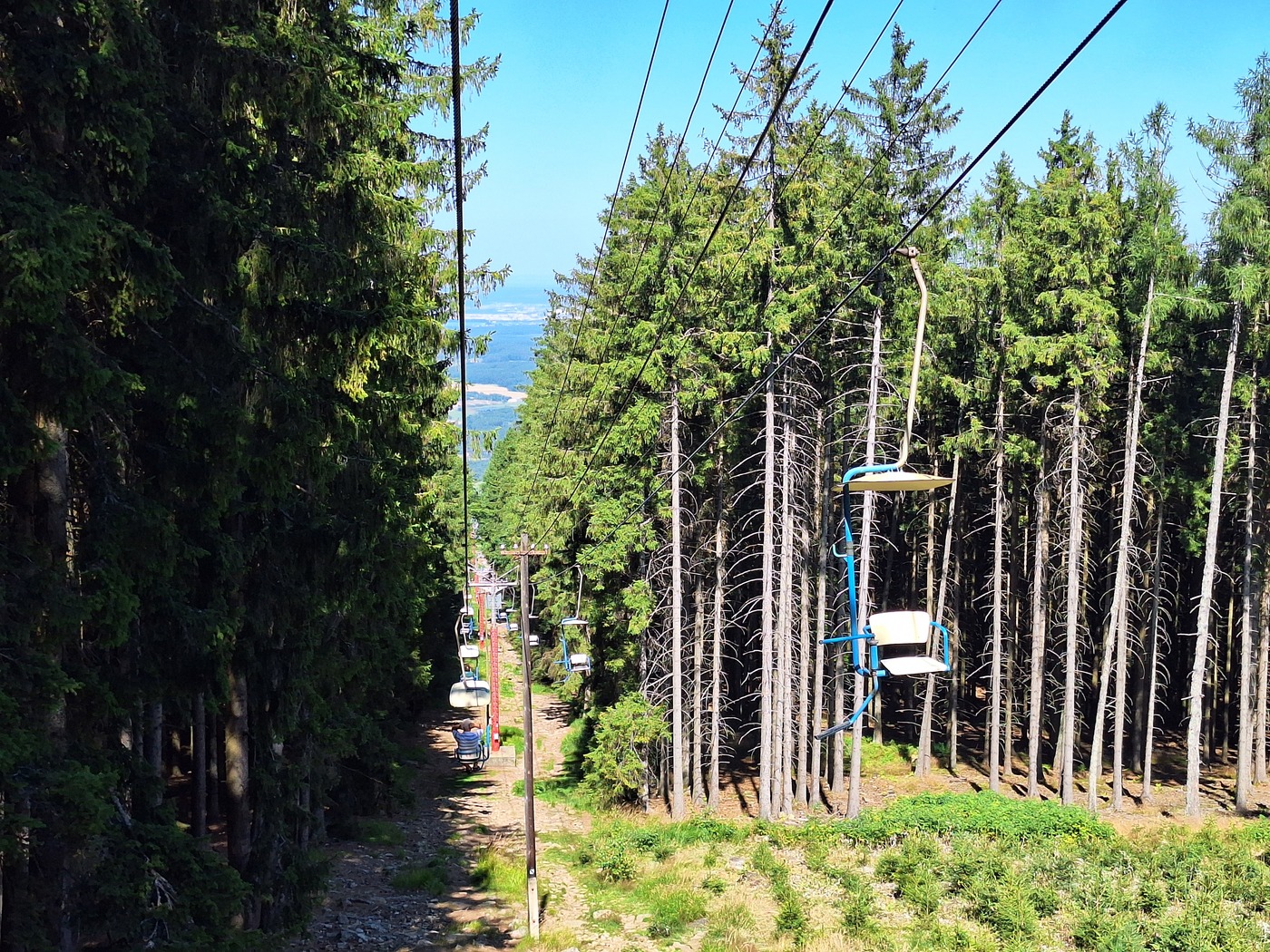
The chairlift ride was nothing short of breathtaking. Silence surrounded us as we glided up through the forest, and it felt as though we were flying like eagles over the treetops. At 1,792 metres long, the ride is among the longest I’ve experienced, taking about 15 minutes from base to summit. Along the way, we spotted hikers making their way up the slope beneath us. The ascent is not technically difficult, but it does require stamina and good footwear, as the path can be slippery when wet. For many locals, the hike up Kleť has become something of a tradition — an early-morning jog to the summit, a quick refreshment at the top, and then back down before the day begins.
The oldest stone lookout tower in Bohemia
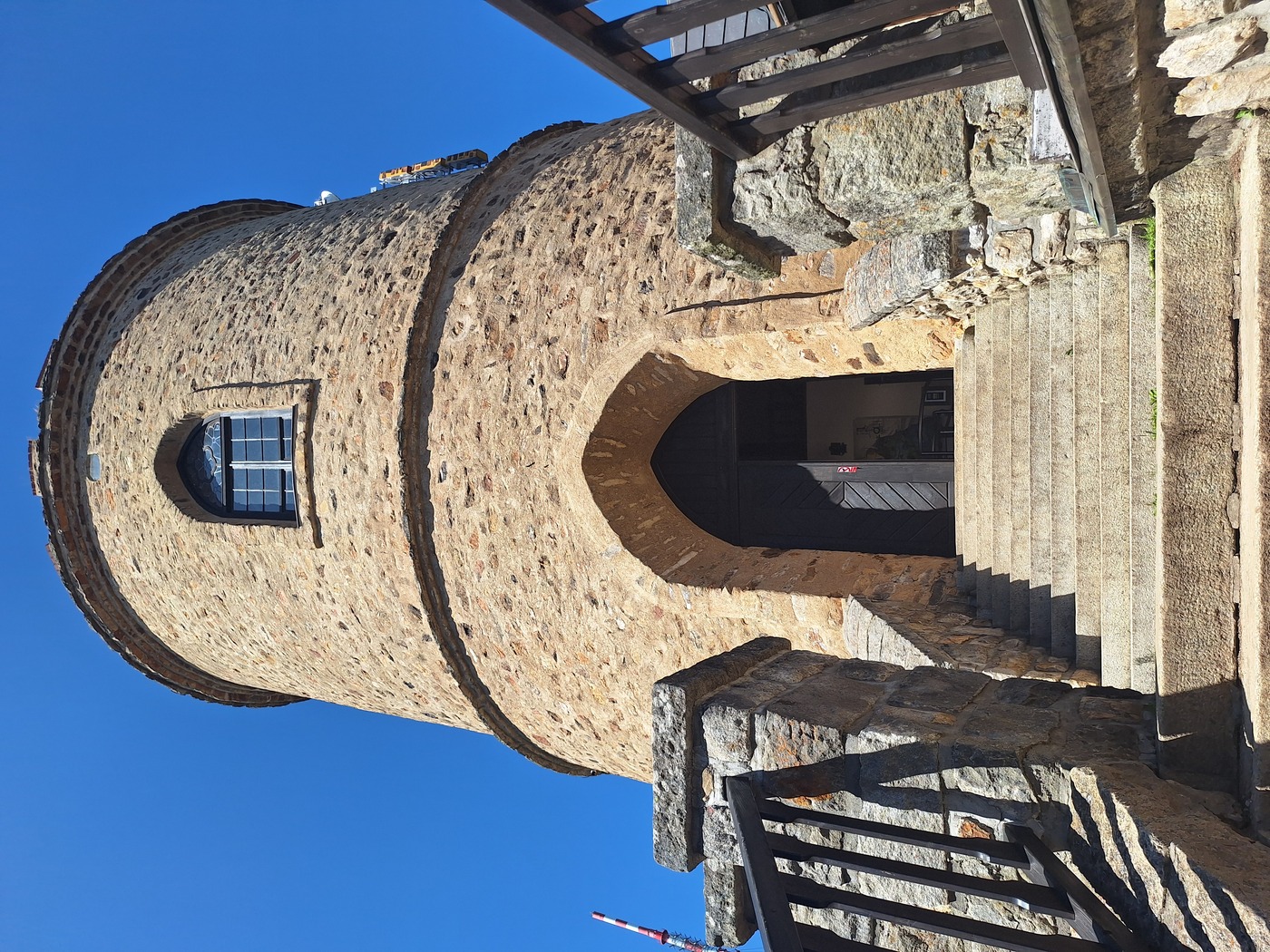
At the summit, we were greeted by Josef’s Lookout Tower, a 20-metre-high stone tower dating to the early 19th century. Built by Prince Joseph II of Schwarzenberg, it is the oldest stone lookout tower in Bohemia and remains a proud symbol of the region. The views from the top are said to stretch across South Bohemia, making it a must-see for those who climb its steps.
Horská chata Kleť – Theresa’s Cottage
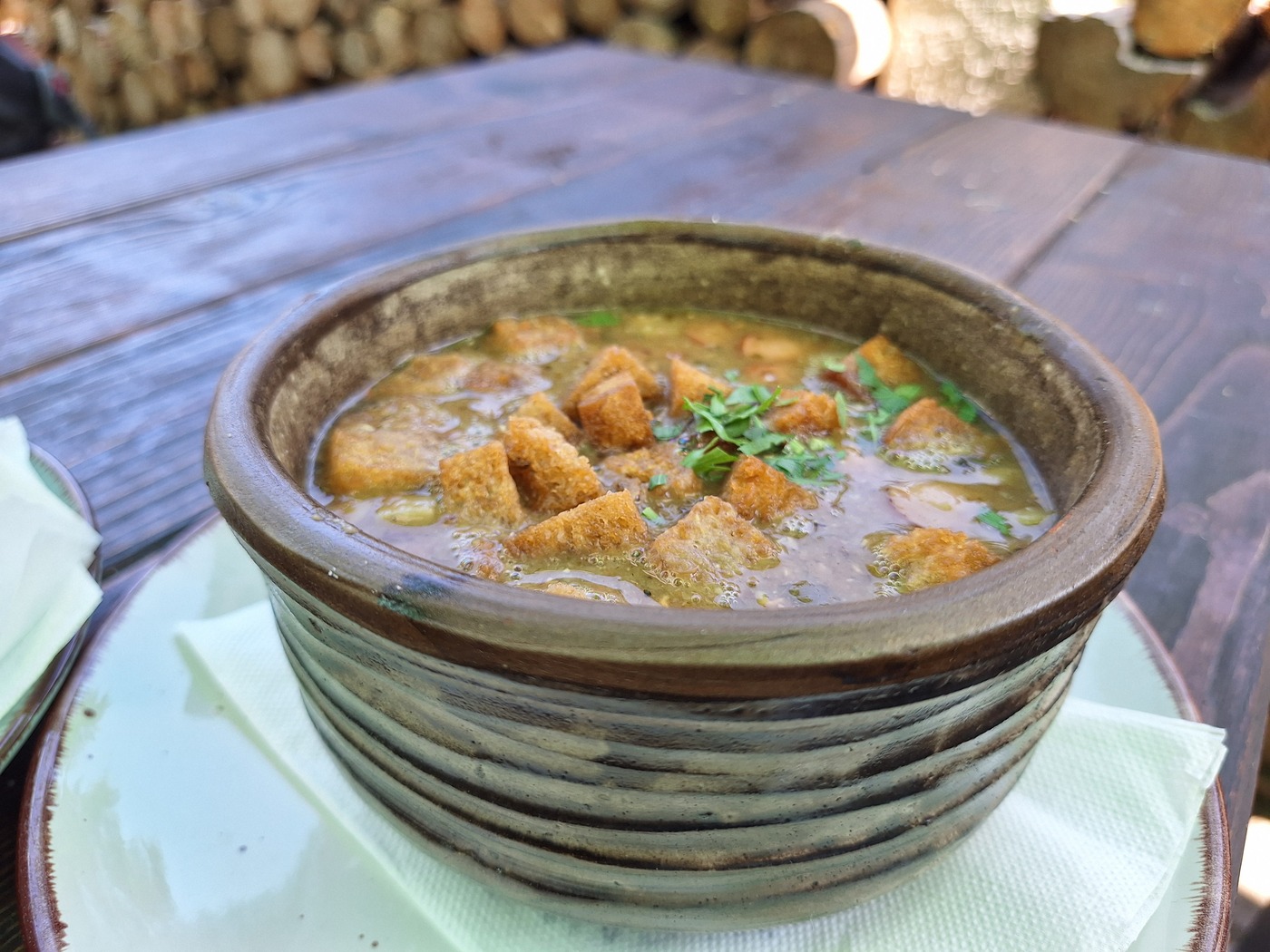
Beside the tower stands Horská chata Kleť, also known as Tereziina chata, named after Princess Theresa of Schwarzenberg. This charming chalet has long been a welcoming base for hikers and visitors, offering both refreshments and accommodation. It is one of the highest-situated pubs in South Bohemia and is renowned for serving its own beer, the Kleťák 12°, brewed specially for the site. We paused here for a hot soup to warm ourselves, and Jason savoured a glass of Kleťák, which he thoroughly enjoyed. The idea of staying overnight in such a place was tempting — just imagining the stars in a clear mountain sky made it sound magical.
A visit to Kleť Observatory
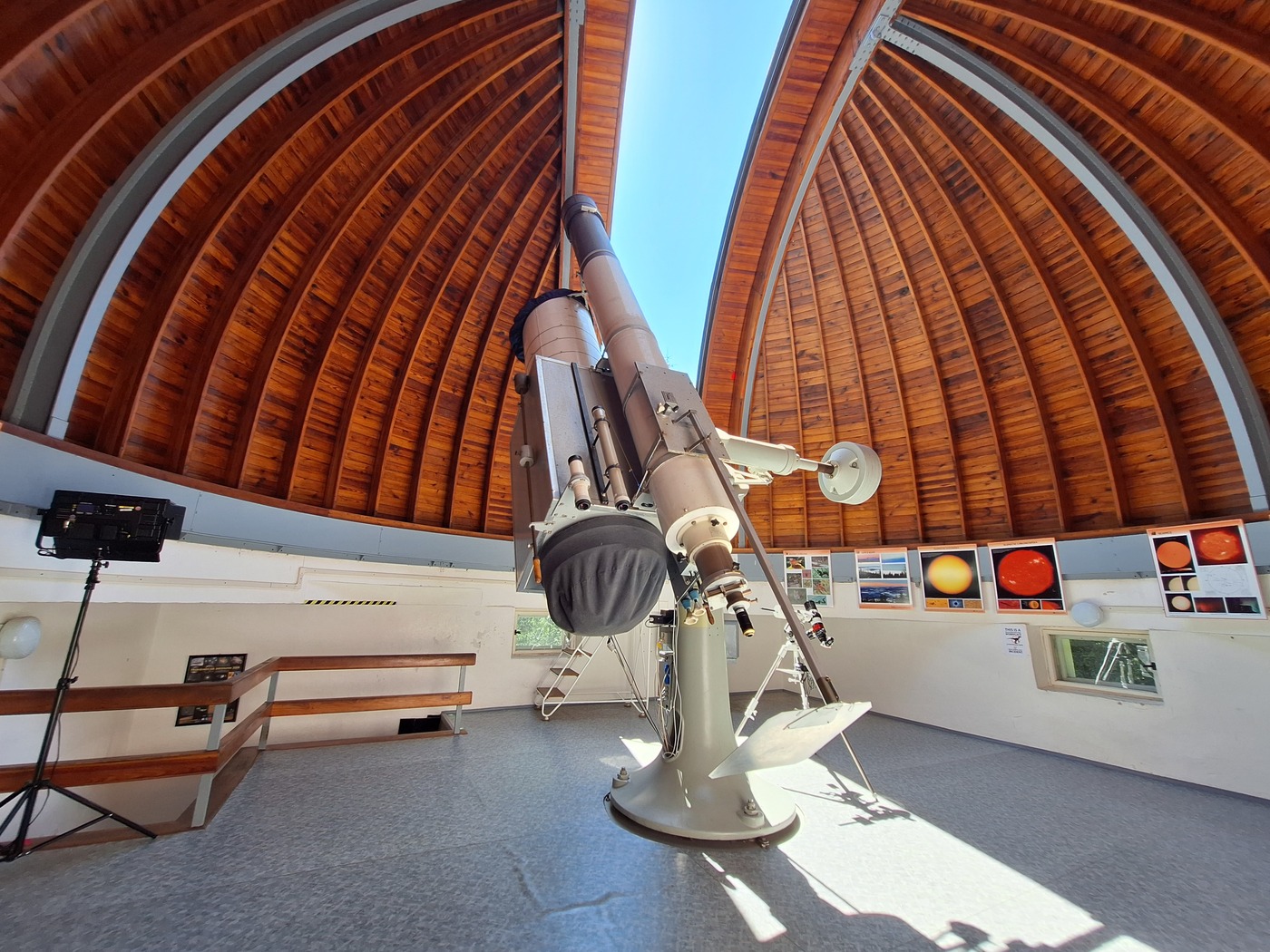
From there, we set off on a short walk through the Blanský les forest, a protected landscape area, and arrived at Kleť Observatory. Perched at 1,070 metres above sea level, it holds the distinction of being the highest astronomical observatory in the Czech Republic. Founded in 1957, it is dedicated to the study of near-Earth objects, particularly asteroids and comets that could approach our planet. The observatory houses two impressive telescopes. During our guided tour, we had the chance to step inside one of the domes, where a huge telescope extended through the open roof. Through it, we gazed directly at the sun — a thrilling moment for both of us. To our surprise, we learned that we were the first visitors from Malta ever to set foot inside the observatory, which made the experience even more memorable.
Evening dining at Brio Restaurant
After returning to our hotel by taxi, we closed our visit with a special evening meal at Brio Restaurant, one of the top dining spots in České Budějovice. Housed in a historic corner building with beautifully ornate architecture, the restaurant combines Czech cuisine with French and Italian influences. For starters, I enjoyed beef tenderloin carpaccio while Jason chose buffalo mozzarella. For our main courses, I selected duck breast in a red wine sauce, and Jason ordered braised beef cheeks. Paired with an excellent red wine, the meal was the perfect finale to our two-day adventure.