Welcome to my fifth part of a five-part story covering our 10-day train Journey from Italy, through Austria and Czechia to Germany
Half a Day in Regensburg
Our next train journey took us from České Budějovice to the medieval town of Regensburg, a ride of about four and a half hours through serene Bavarian landscapes.
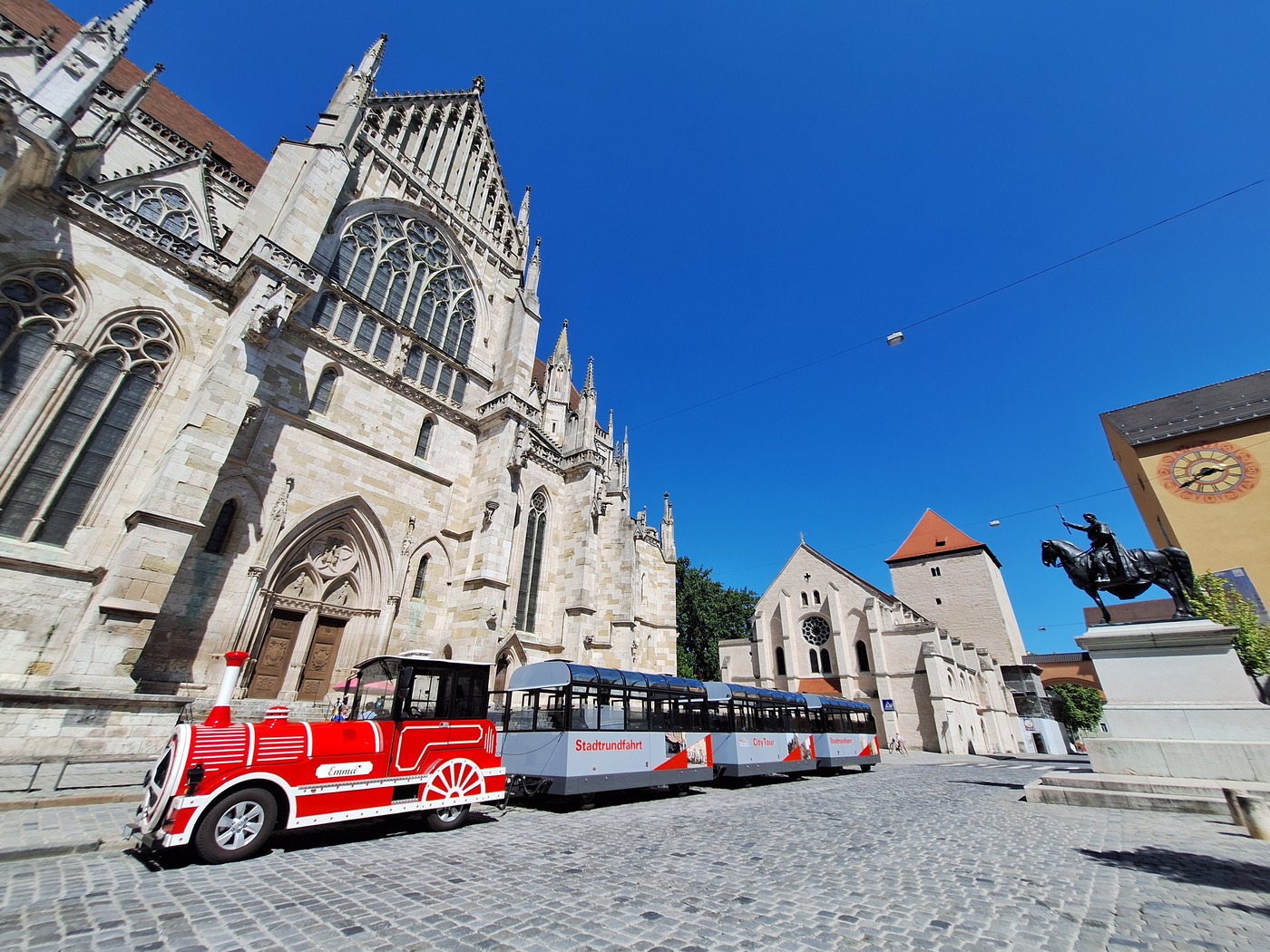
With only five hours to explore this UNESCO World Heritage city, we began our visit aboard the Bimmelbahn City Train — a small sightseeing train offering an audio-guided tour around the historic centre. It was the perfect way to gain an overview before deciding which parts to explore on foot. The ride, which departs from in front of Regensburg Cathedral, was both practical and delightful, especially under the hot August sun.
A city steeped in layers of history
Regensburg lies in Bavaria, in southeastern Germany, gracefully stretched along the Danube River. The city’s story spans more than two millennia — from its Roman beginnings as Castra Regina, through its medieval prosperity, to its role as an imperial meeting place of the Holy Roman Empire.
Its Old Town (Altstadt) together with Stadtamhof, the smaller historic district across the Danube, was inscribed as a UNESCO World Heritage Site in 2006 for its remarkably preserved medieval architecture and urban fabric. Because Regensburg was largely spared from destruction during World War II, its cobbled streets, patrician towers, and grand churches remain intact, offering visitors the rare chance to step directly into the past.
Highlights of Our Visit
• Regensburg Cathedral (Dom St Peter)
This magnificent Gothic cathedral, with its soaring twin spires, dominates the skyline and embodies the spiritual and architectural heart of the city. Construction began in the 13th century after a fire destroyed the earlier Romanesque church.
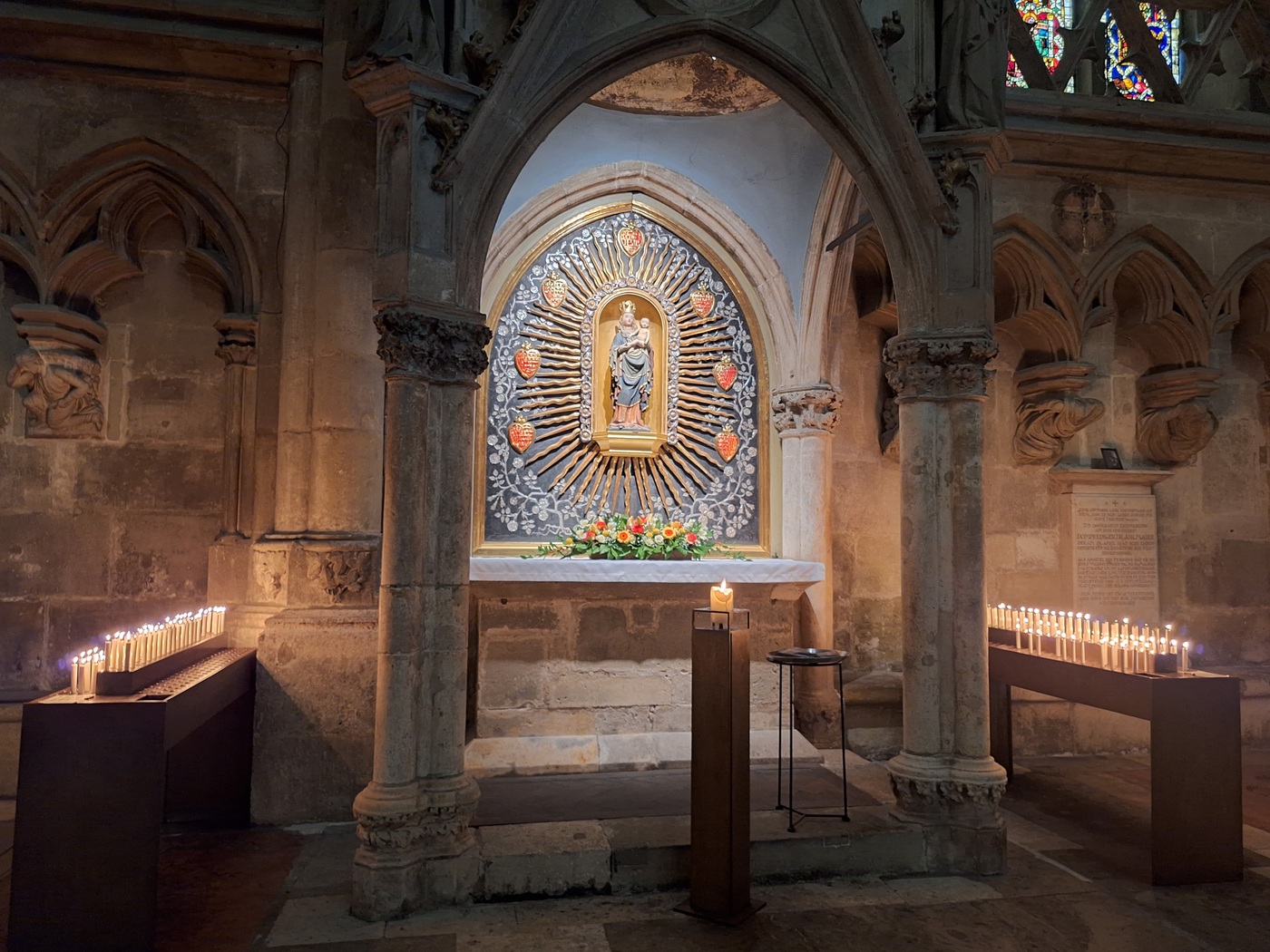
Inside, we were struck by the sheer height of the nave and the interplay of darkness and colour — the dim interior dramatically illuminated by vivid stained-glass windows. Key Gothic features, from rib vaulting and pointed arches to delicate stone tracery, all speak to centuries of craftsmanship. The cathedral’s spires now rise to about 105 metres, a defining symbol of Regensburg’s silhouette.
• Monument of King Ludwig I of Bavaria
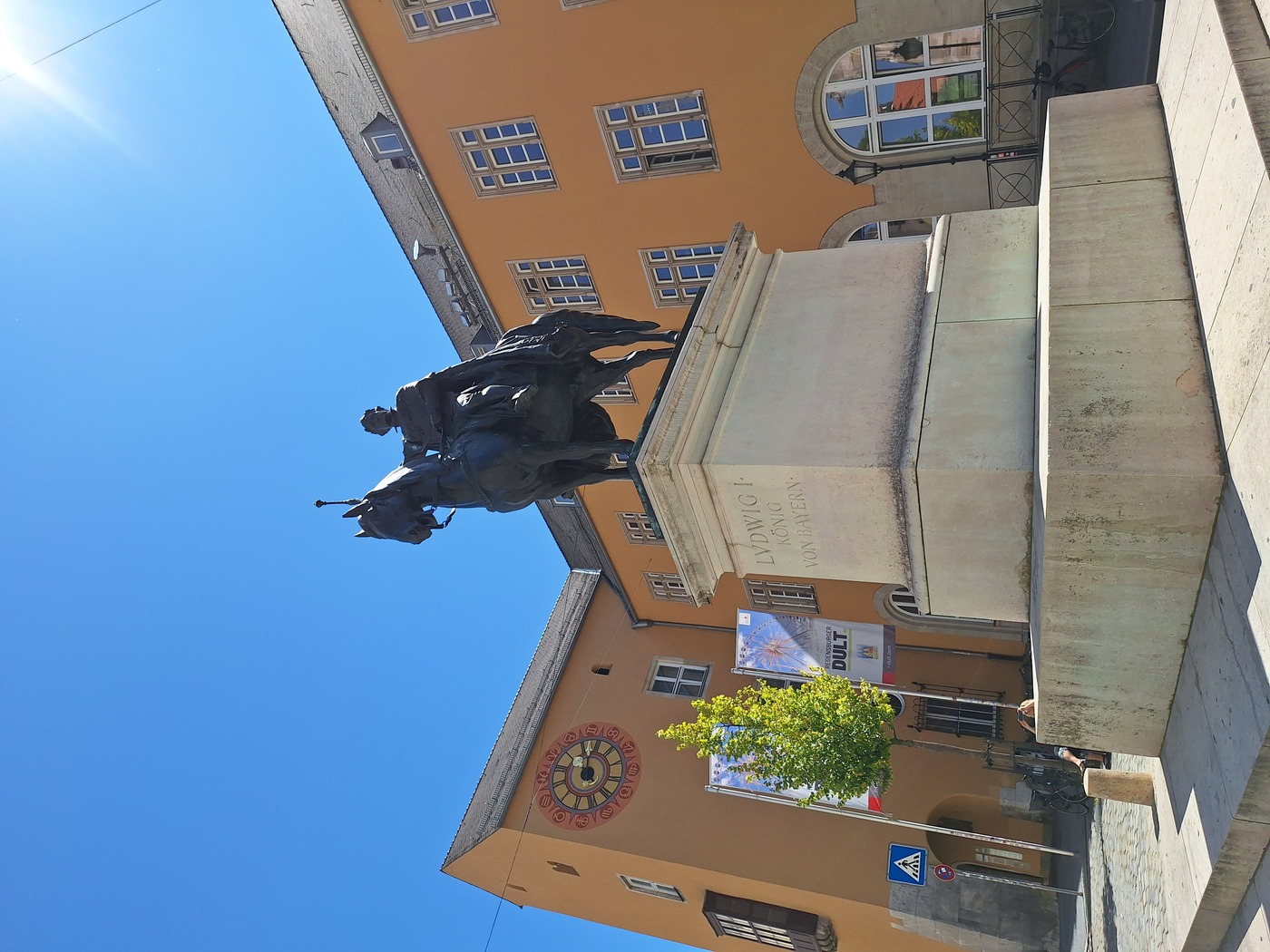
Right in front of the cathedral, on Domplatz (Cathedral Square), stands the bronze monument to King Ludwig I (reigned 1825–1848). Depicted on horseback and draped in a classical mantle, Ludwig is honoured here for his patronage of the arts and his commitment to heritage preservation. It was under his direction that the cathedral’s towers — left unfinished for centuries — were finally completed in the 19th century.
• Old Stone Bridge (Steinerne Brücke)
Crossing the Danube via the 12th-century Stone Bridge was a highlight of our visit. Stretching 310 metres with 16 arches, this medieval masterpiece once served as a crucial link for merchants and pilgrims travelling across Europe. The bridge connects the Old Town with Stadtamhof, uniting both sides of the UNESCO-listed historic ensemble.
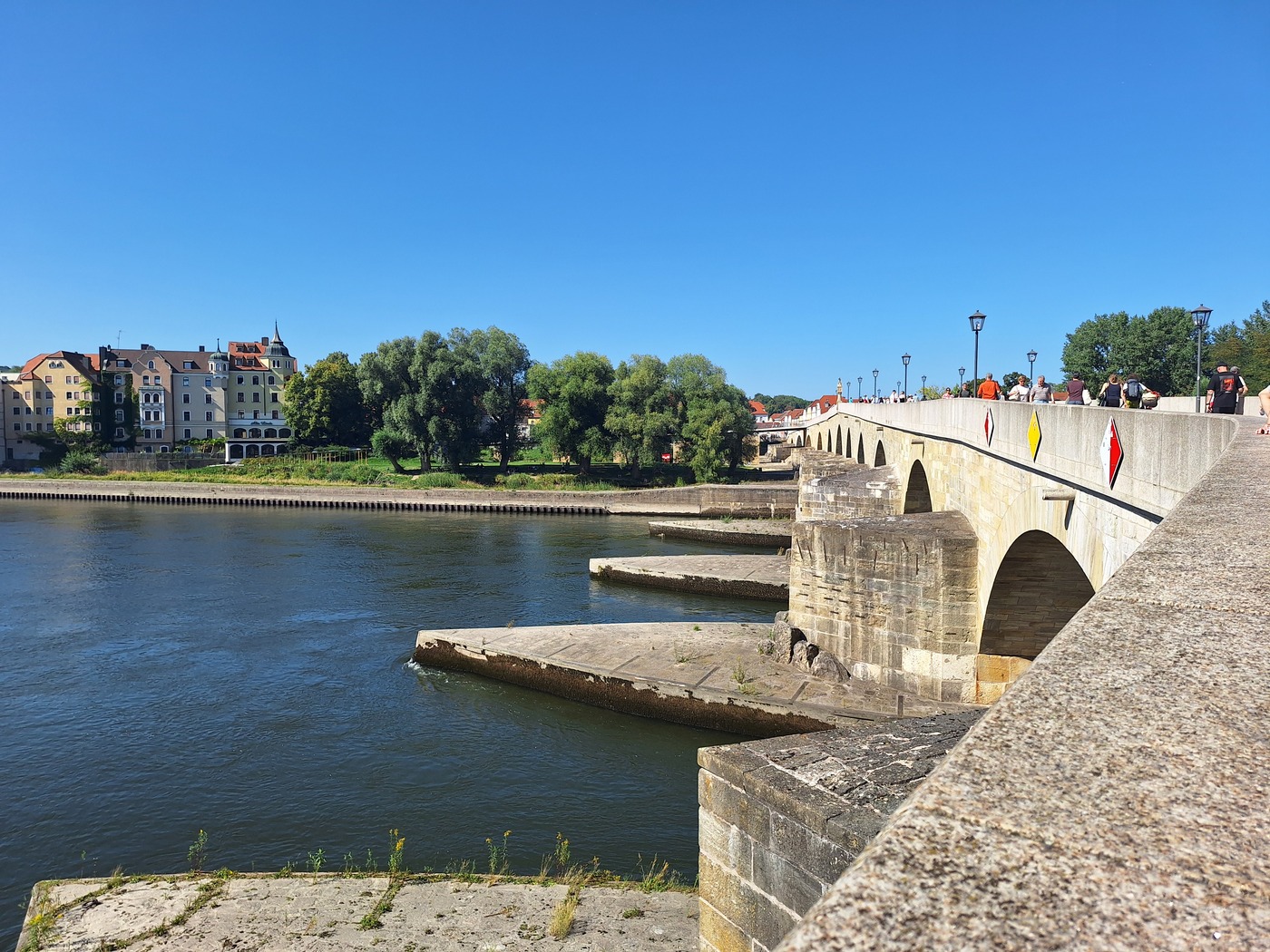
From the bridge, we enjoyed sweeping views of the river and the old town, framed by the Gothic spires of the cathedral to the south. According to legend, the bridge’s builder, eager to win his wager against the cathedral’s builder, made a pact with the Devil to finish the bridge first. With the Devil’s help, the bridge was completed in record time. But when the time came to hand over the first three souls to cross it, the clever builder sent a rooster, a hen, and a dog instead. Furious at being tricked, the Devil tried to destroy the bridge, leaving it forever slightly arched in anger — a “hump” that can still be seen today.
• Goliathhaus
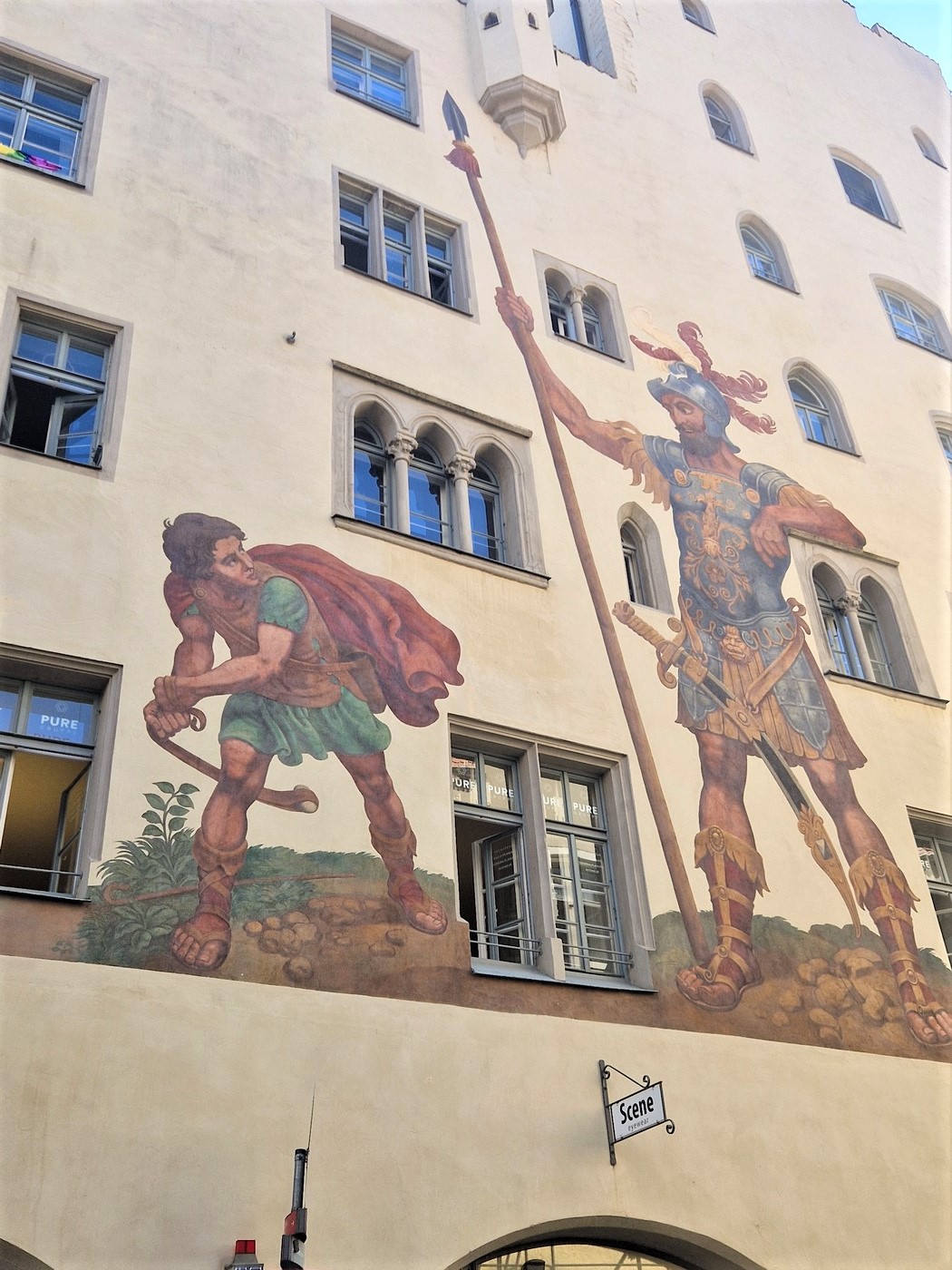
In the heart of the old town stands the Goliathhaus, a grand building whose façade bears a striking mural of David and Goliath. First painted in the 16th century and later restored, it vividly depicts the biblical scene of the young shepherd facing the towering giant; one of Regensburg’s most photographed landmarks.
Lunch with a view
When it was time for lunch, we stopped at Wirtshaus im Heuport, conveniently located directly opposite the cathedral. Once a noble residence, this Gothic-Baroque building is now a listed cultural monument and houses a restaurant serving authentic Bavarian cuisine.
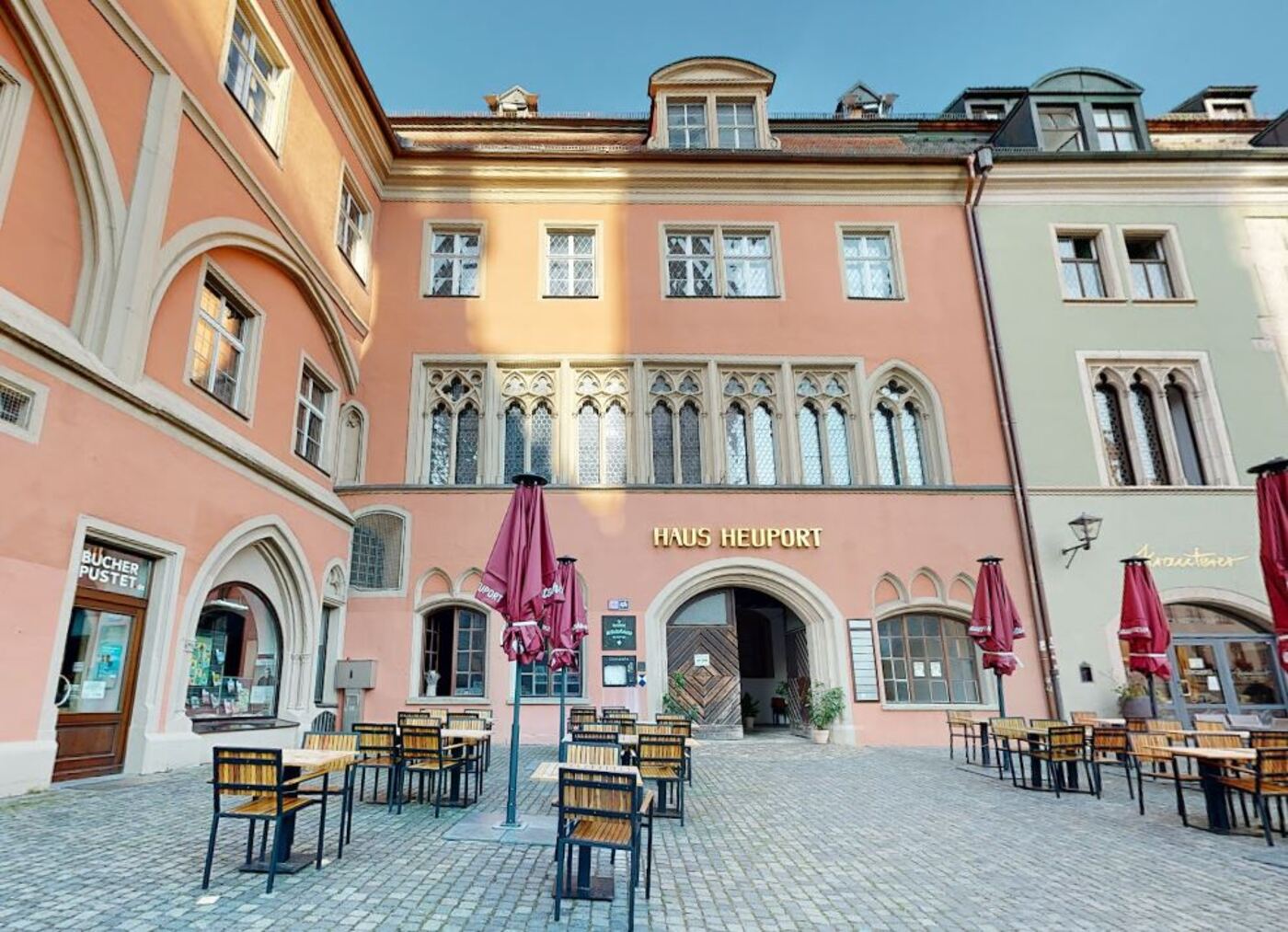
Credit: Jan Hartmann
I ordered the Rosa gebratene Barbarie-Entenbrust which is roast duck breast in orange sauce with red cabbage and a potato dumpling, while Jason chose the Bayrische Spanferkelhaxe, tender pork knuckle in Weltenburger dark beer sauce with cabbage and small potato dumplings. Both dishes were perfectly prepared and full of flavour.
Craft and character in the Old Town
After lunch, we wandered through Regensburg’s charming lanes lined with restaurants, cafés, and artisan shops. The Altstadt is alive with craftsmanship — from traditional hat-makers and soap artisans to brush workshops and small goldsmiths, each preserving centuries-old skills.
Weltenberg Abbey
Getting there: not as simple as it seems
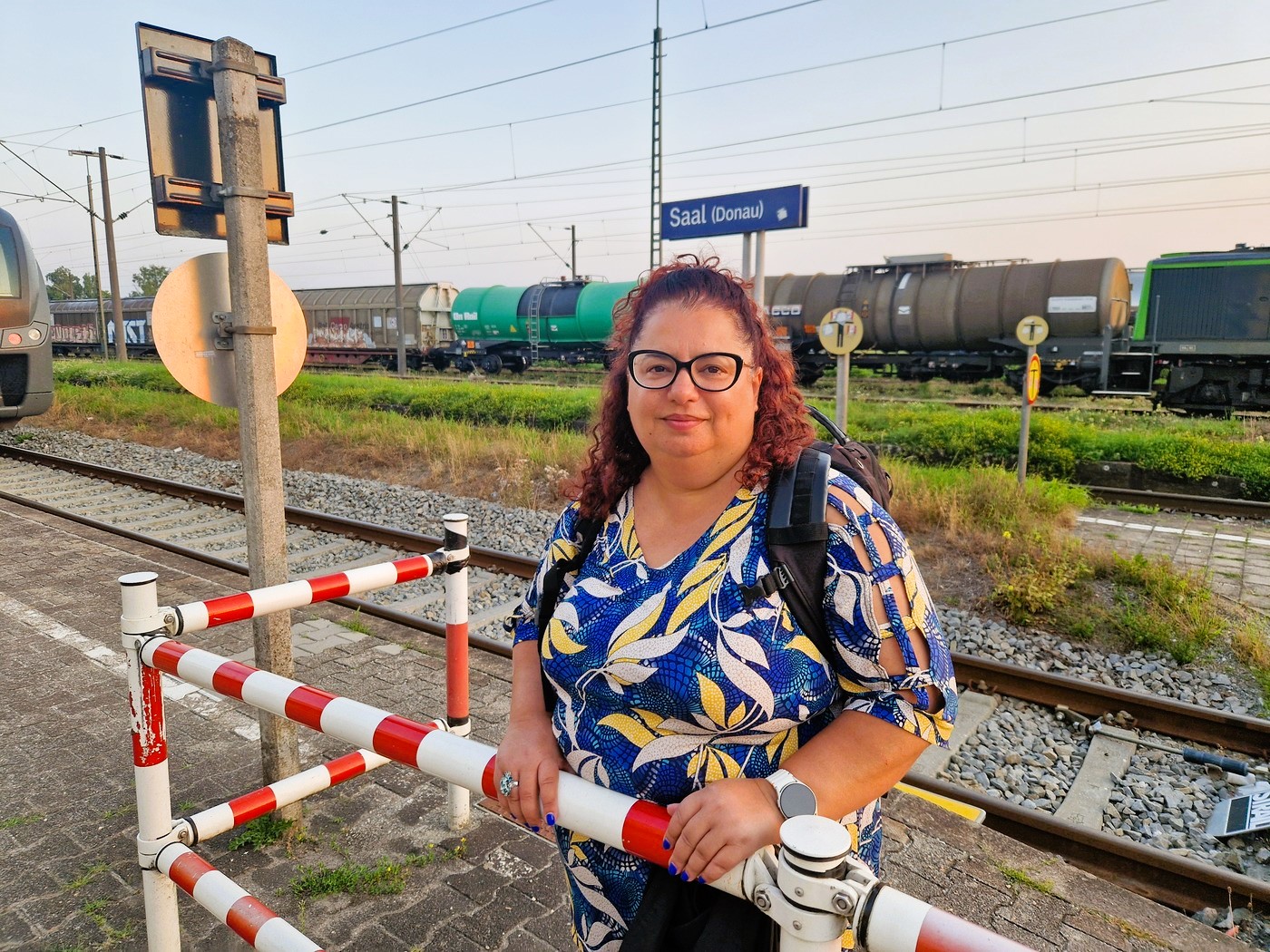
From Regensburg, we hopped on a short 25-minute train ride to Saal (Donau) — a small stop in Bavaria’s Kelheim district. We thought catching a taxi from the station would be easy. Big mistake! Saal station felt like a halt in the middle of nowhere. After several calls, we finally found a taxi to take us to Guesthouse St Georg, our stay within the Benedictine Abbey at Weltenburg.
Tip: Book your taxi in advance!
The Guesthouse at the abbey
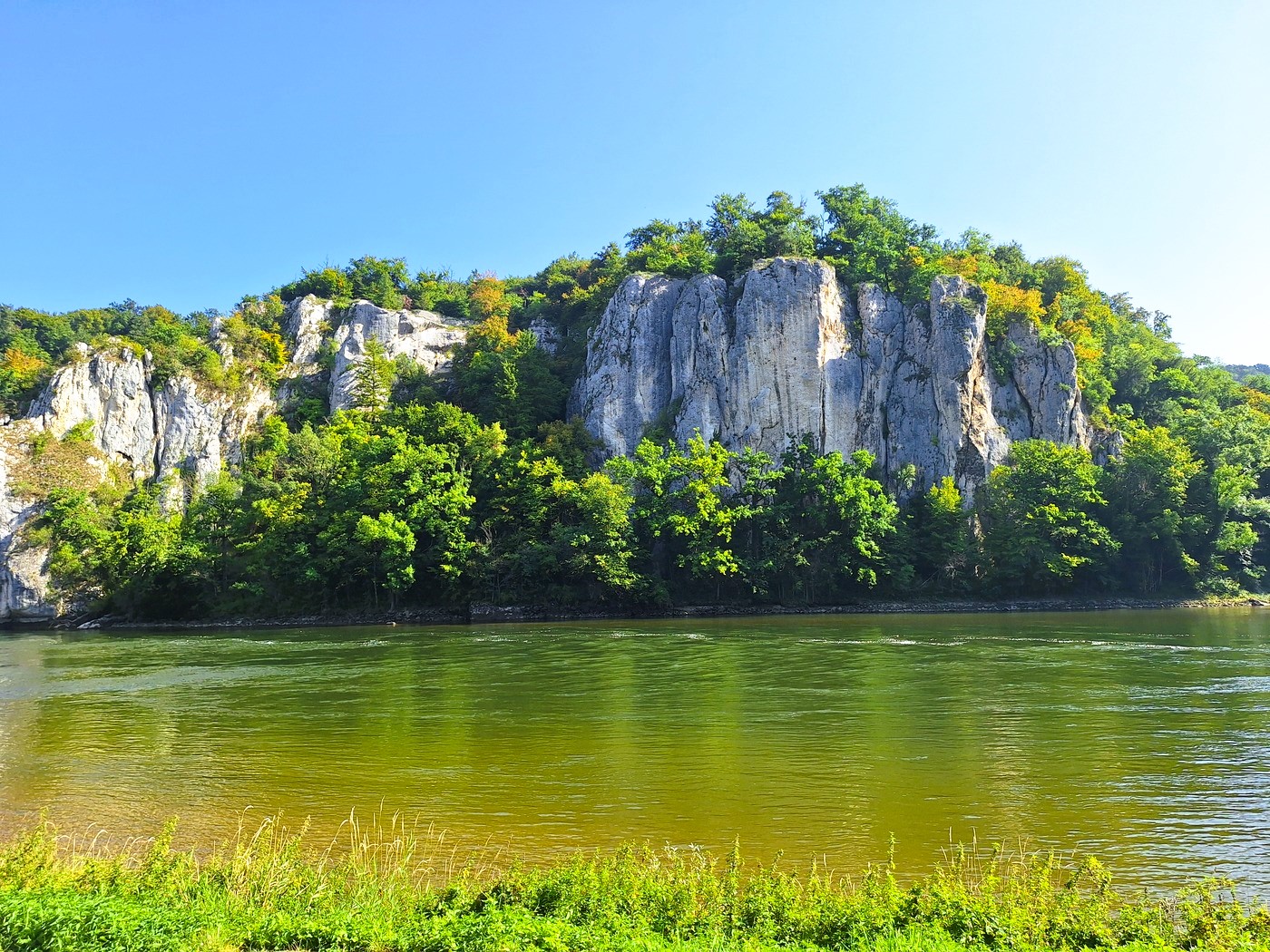
Stepping into Guesthouse St Georg was stepping into stillness. Tucked at the foot of the Danube, surrounded by cliffs and woods, the abbey is one of Bavaria’s most breathtakingly serene corners. It’s easy to see why monks founded it here back in 617.
We arrived late in the day. The abbey was quiet. The beer garden was closed, so we walked to Ferienwohnung zum Donaublick, a nearby bar overlooking the river, for a well-earned snack and drink.
Back to the guesthouse, we discovered that there’s an open self-service bar room: you can grab your beer, water, or coffee, write down what you take, and settle the bill later. Monastic honesty meets Bavarian practicality.
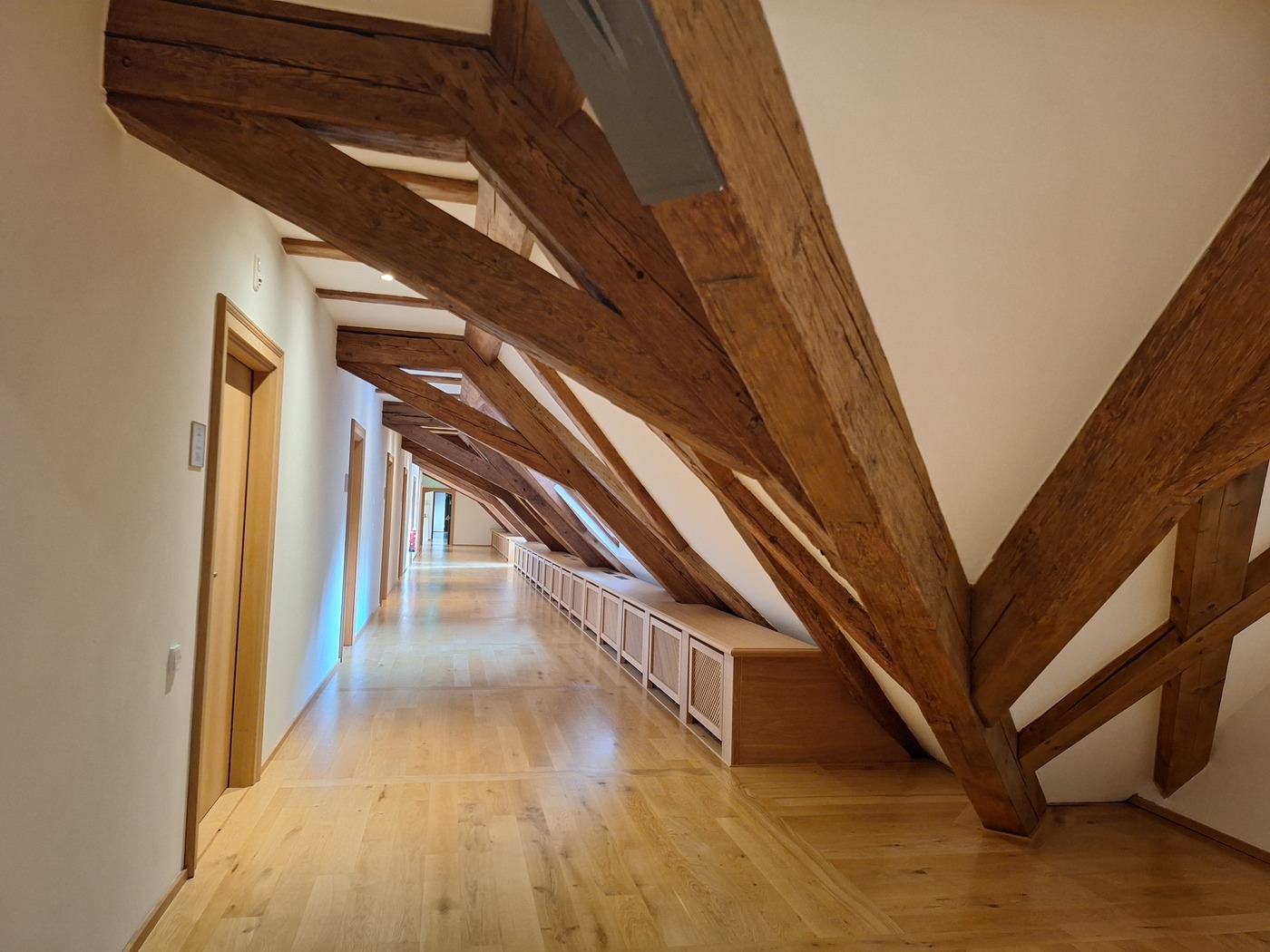
Our room was simple, almost austere — wooden floors, exposed beams, two single beds, and a small central window facing the Danube. Bare, but deeply welcoming. From that little window, the world felt perfectly composed: river, trees, silence.
Morning calm
Breakfast brought life back into the quiet corridors. Only then did we realise how many other travellers were staying at the guesthouse. After breakfast, we waited for the boat across the Danube Gorge to Kelheim — but not before exploring a bit.
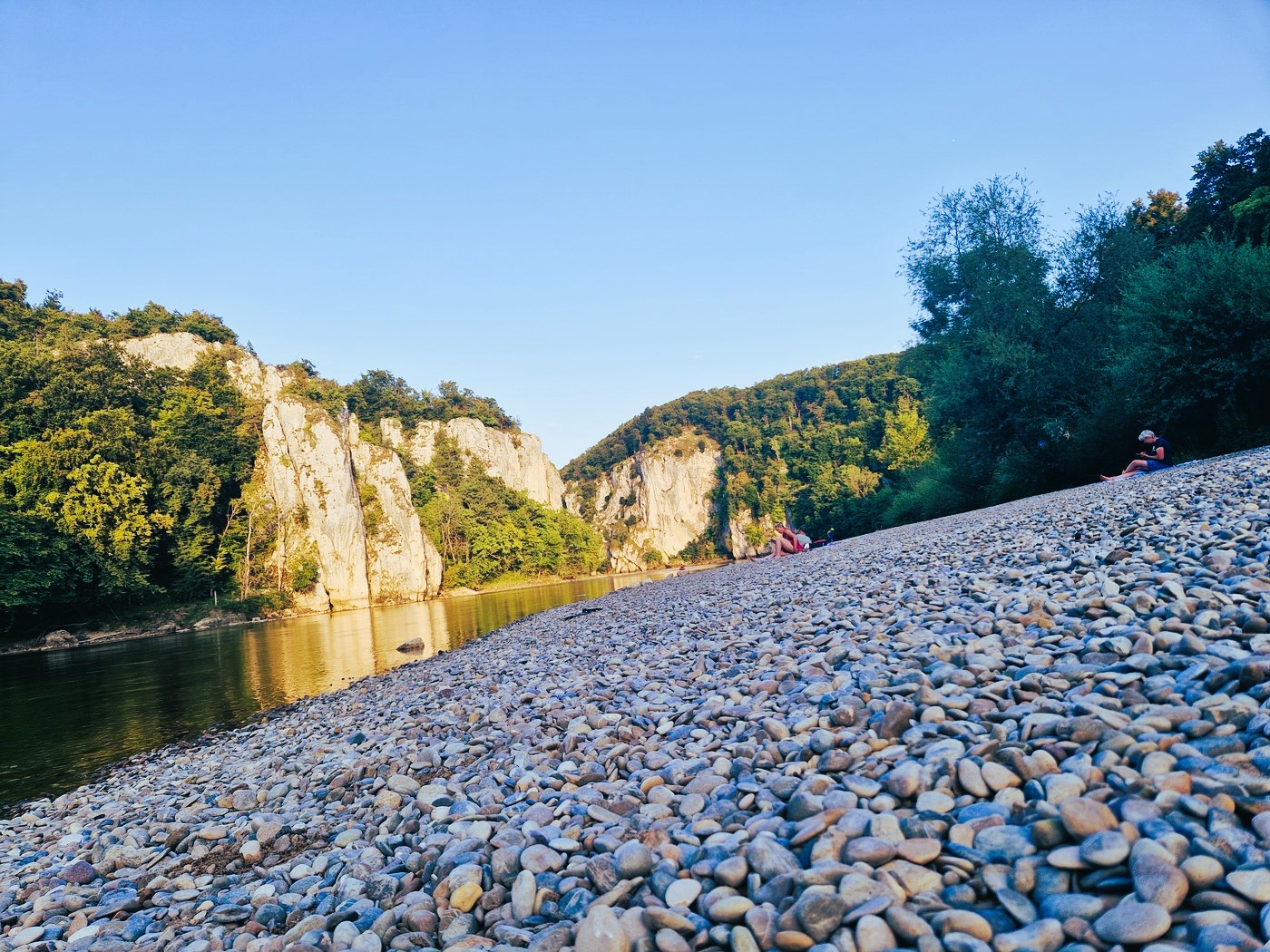
The gravel beach, the steep cliffs, the green trees of the woods beyond, the silence, and the volume of the Danube waters continuously flowing along, all came together in one of those moments when you want time to stand still.
Crossing the gorge to Kelheim
When the double-deck boat Ludwig der Kelheimer approached, it was an impressive sight on the wide river. As we waited to board, many travellers came down from the boat to visit the abbey.
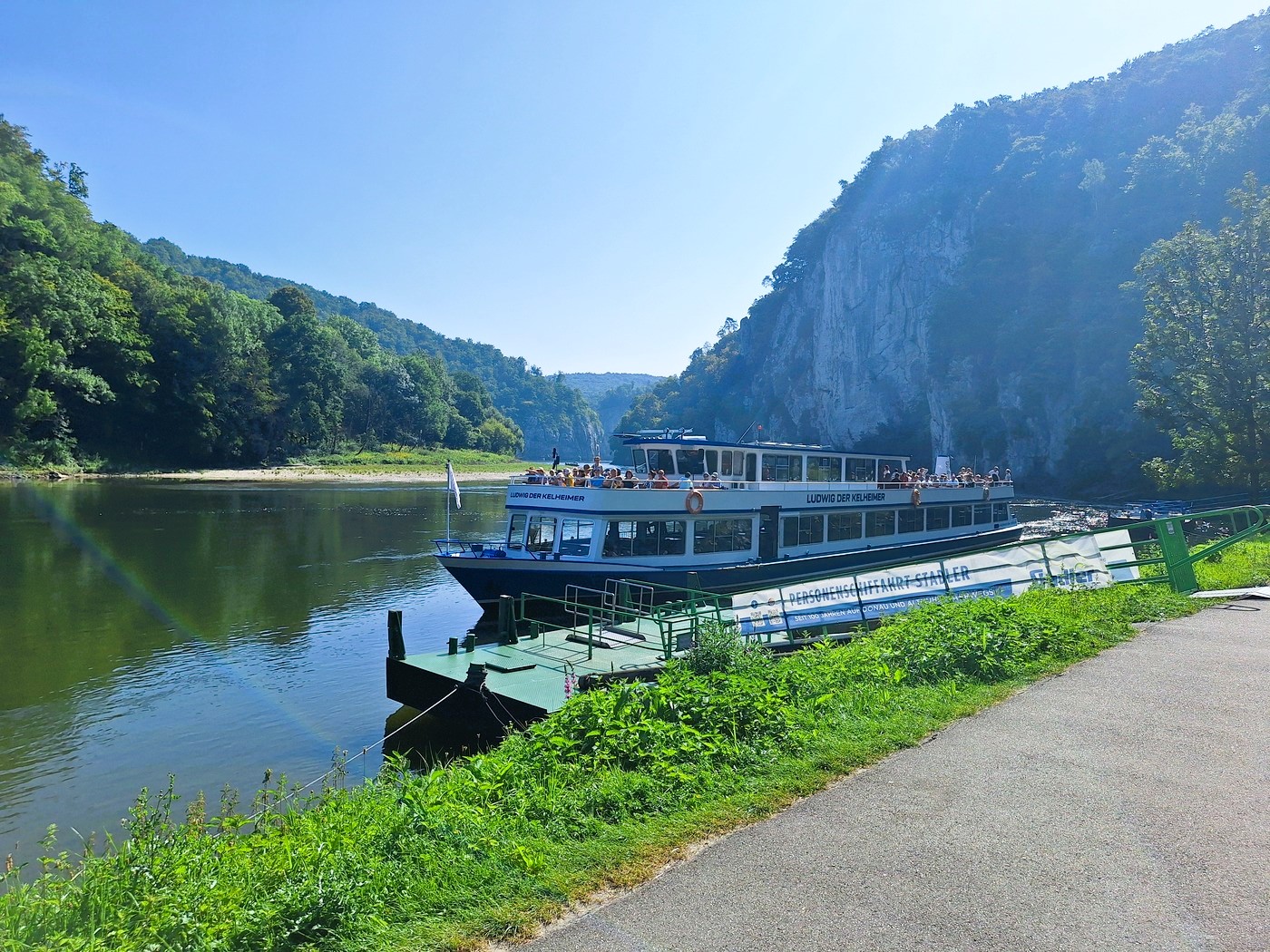
The boat trip to Kelheim took around 40 minutes. As we glided along the waters, we were given a guided tour of the area. The ride was peaceful and refreshing, with drinks served on board, and the Danube shimmering like glass all the way.
Inside the church in the abbey’s courtyard
Back at the abbey later, we visited the Abbey Church of St George, one of Europe’s finest Baroque churches. Since the facade of the church is remarkably restrained, it comes quite as a surprise when you walk in and find its exuberant richly decorated interior.
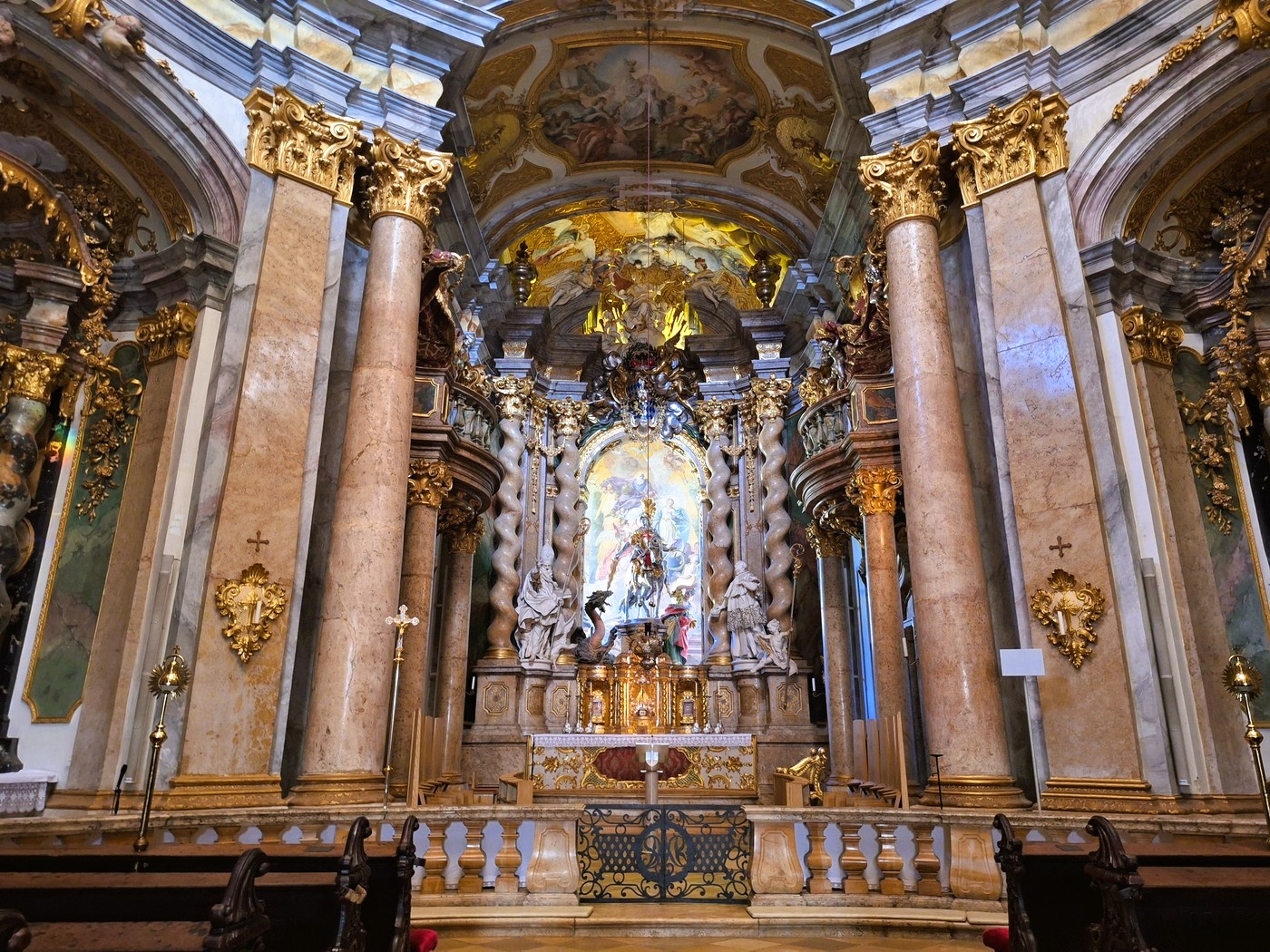
A vast oval fresco fills the ceiling with a magnificent scene of the Glorification of St George. The high altar erupting in gold and marble, show a sculptural group with St George on horseback, bursting forward from the altar frame, thrusting his spear into the dragon beneath him.
By the Danube’s edge
In front of the abbey lies a broad gravel beach, where the Danube widens before entering the gorge. The water looked inviting, and we couldn’t resist stepping in. We entered the river only knee-deep, careful not to go further. Even so, we could feel the strong pull of the current — a striking reminder of its power. Around us, warning signs clearly advised visitors about the danger of swimming in this area.
At the abbey beer garden
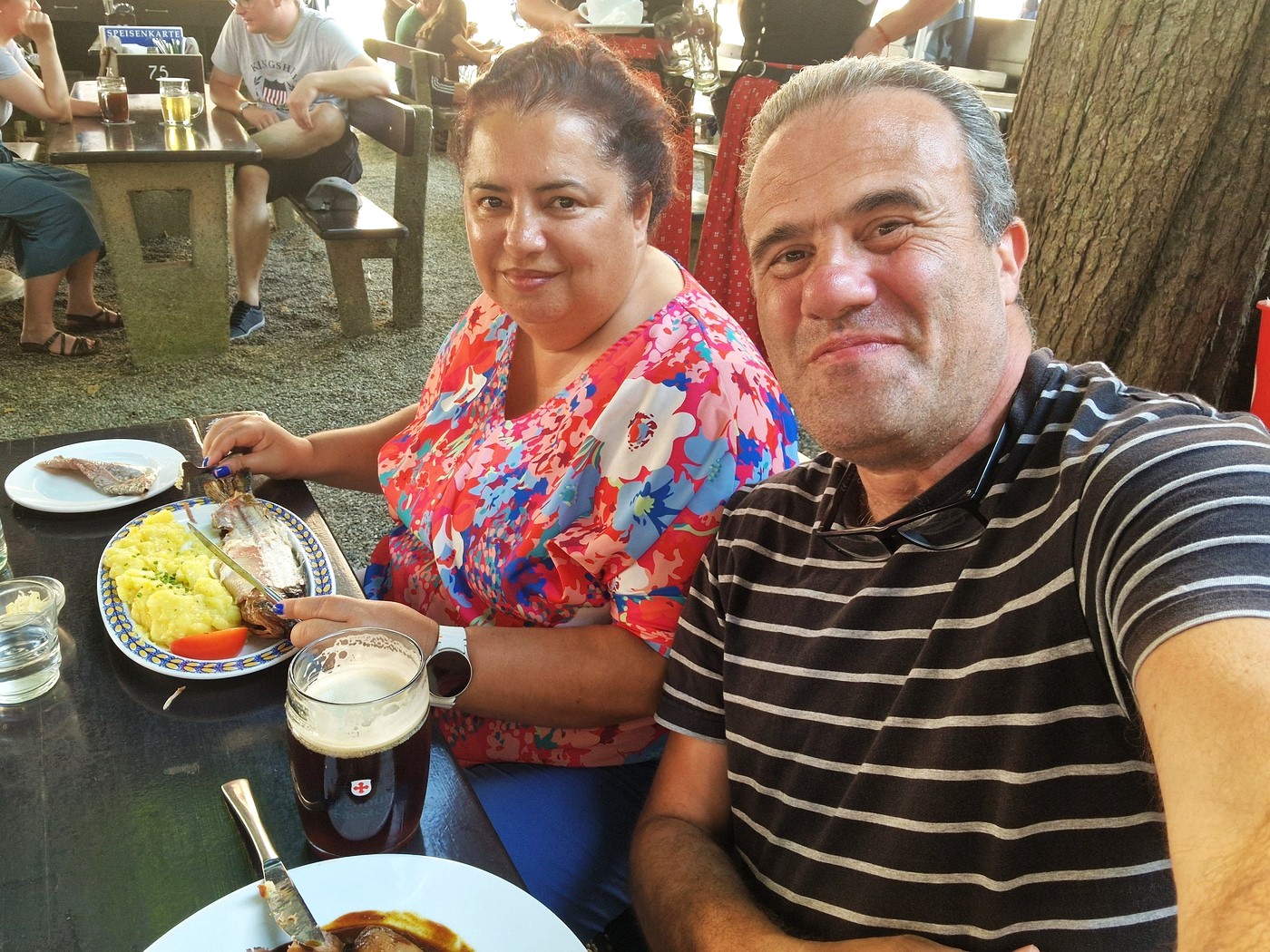
It was late afternoon, and the beer garden in the abbey courtyard was buzzing with people. Tables were filled, conversations flowed easily, and visitors were choosing their meals from a varied menu.
During this our stay, Jason sampled the Weltenburger Barock Dunkel, the dark, malty beer brewed here by the oldest abbey brewery in the world (since 1050). He also tried the lighter Weltenburger Kloster Hell, smooth and golden. It was a true pity I don’t like beer!
A night to remember
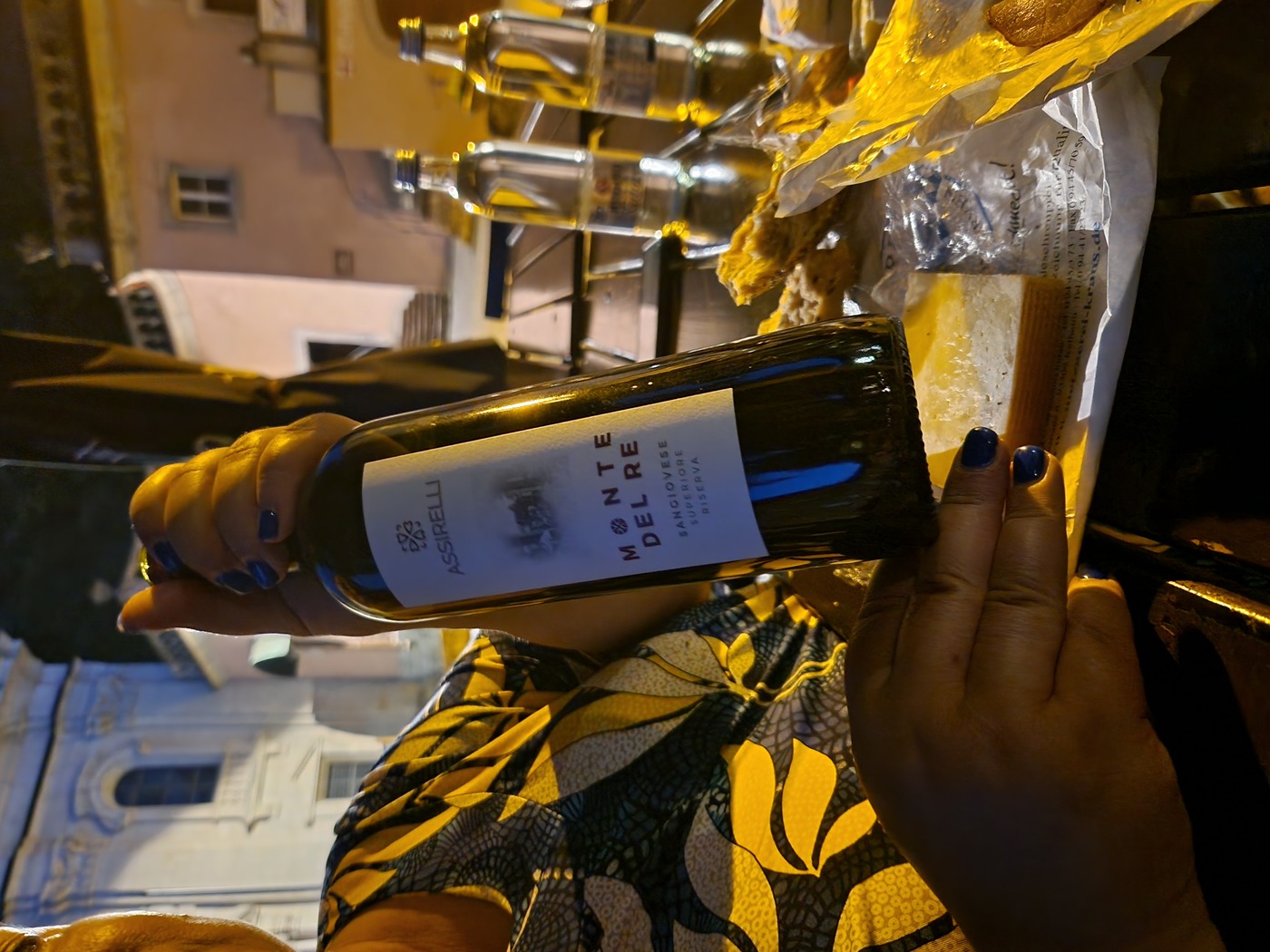
Later at night, as the abbey fell silent, we stole into the courtyard like two mischievous elves — wine bottle, cheese, and salami in hand. Under a flickering lamp beside the church, we opened our Monte del Re – Romagna DOC Sangiovese Superiore Riserva, the red we’d bought in Dozza. It was bold, elegant, perfect with our little feast. The Danube murmured close by, the abbey loomed above, and all was right with the world. A fitting farewell to two days of peace, beauty, and nature at Weltenburg Abbey.
A Morning in Kelheim
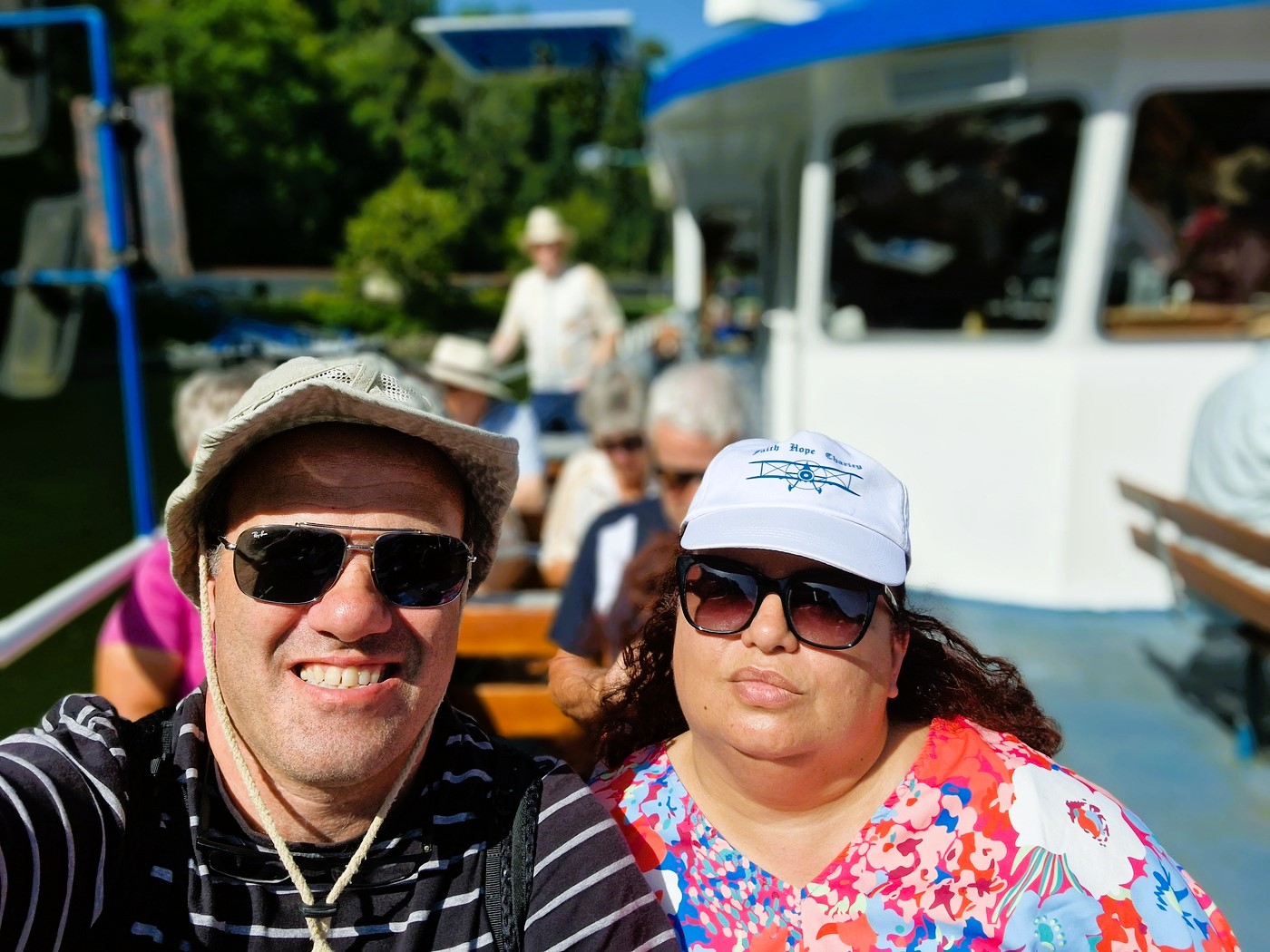
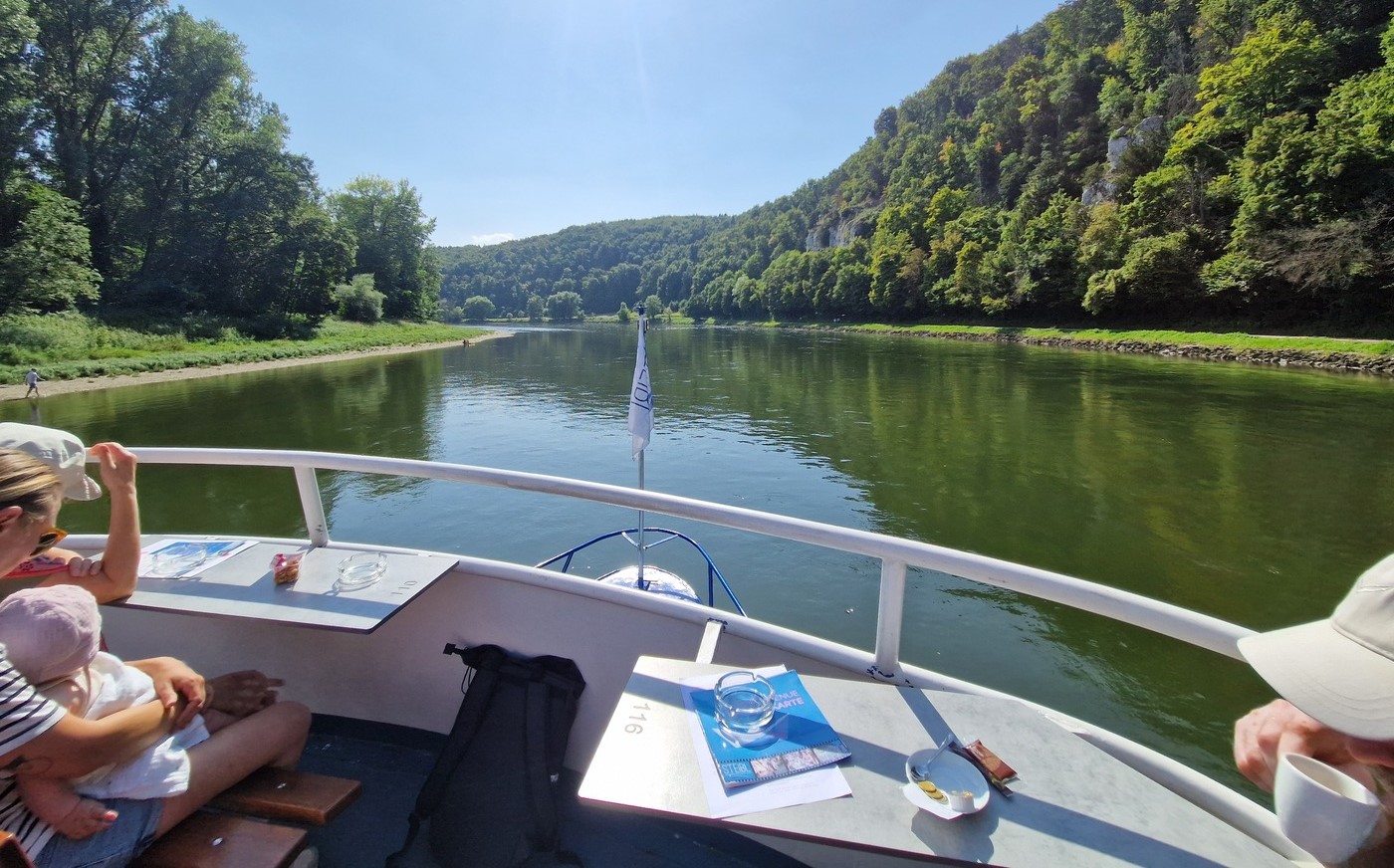
During our two-day stay at Weltenburg Abbey, we decided to take the opportunity to visit the nearby town of Kelheim. A river route connects the abbey with the town, and we boarded the double-deck boat Ludwig der Kelheimer, which departs from the landing stage just below the abbey.
The journey lasted about 40 minutes, a smooth and scenic glide along the Danube, with drinks available on board and a guided commentary about the gorge and its surroundings.
First impressions of Kelheim
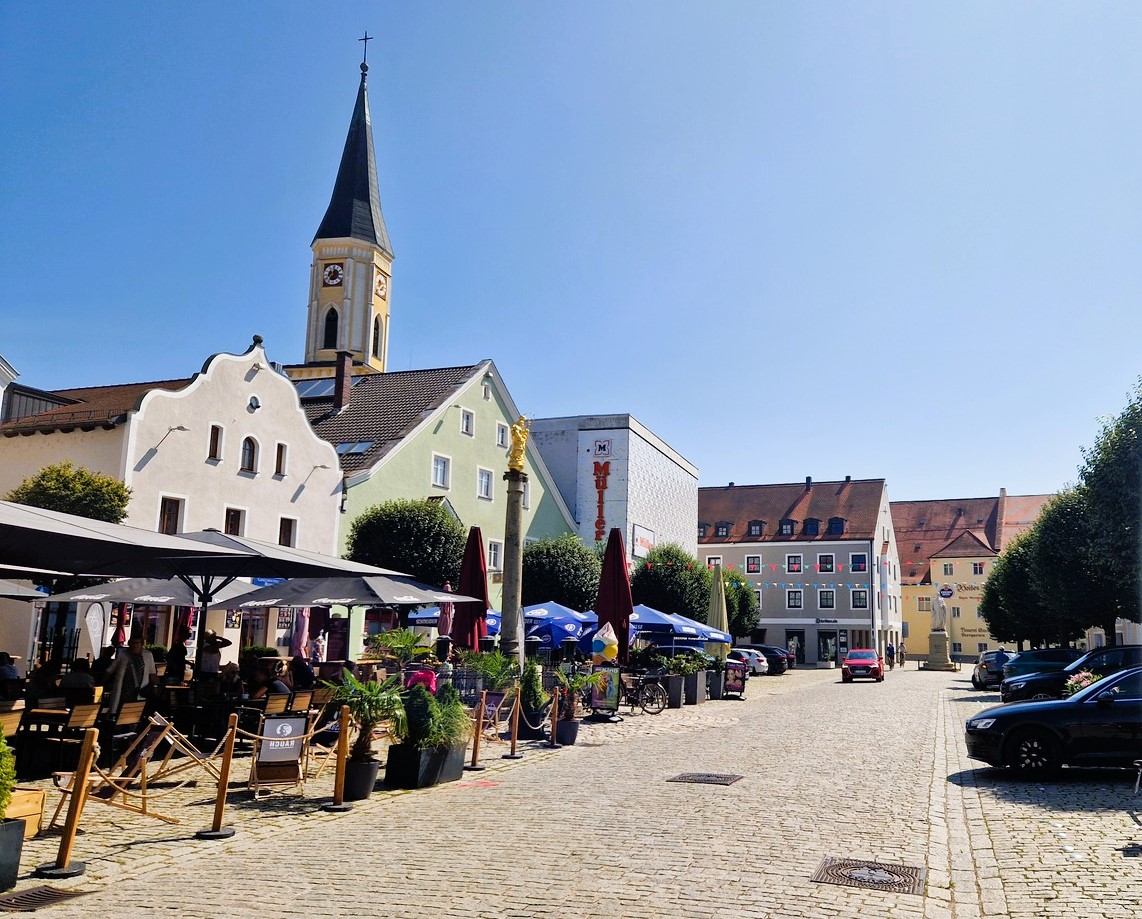
We found Kelheim to be a small town, yet full of its own treasures. We entered through the Mittertor (Middle Gate), part of the town’s original fortifications, its clock face and stone arch marking the entrance to the old centre. Beyond it stretched a broad street lined with pastel houses, shops, cafés, and restaurants, leading us to Ludwigsplatz, the main square. Here, the old town hall, the statue of King Ludwig I, and the Baroque column topped with a golden Madonna stand gracefully together, giving the square a balanced, understated beauty that perfectly reflects the town’s character. It’s no surprise that the square is listed as a protected architectural monument in Bavaria.
Discovering a local tradition
A few steps from the square, we came upon the Church of the Assumption of the Virgin Mary, Kelheim’s parish church. On its main wooden door, a chalk inscription caught our attention: 20*C+M+B+25. We had seen the same marking above the doors of our rooms at Weltenburg Abbey. A quick search on the internet revealed that this is a traditional Epiphany blessing, common in Catholic regions like Bavaria and Austria, meaning “May Christ bless this house in the year 2025.”
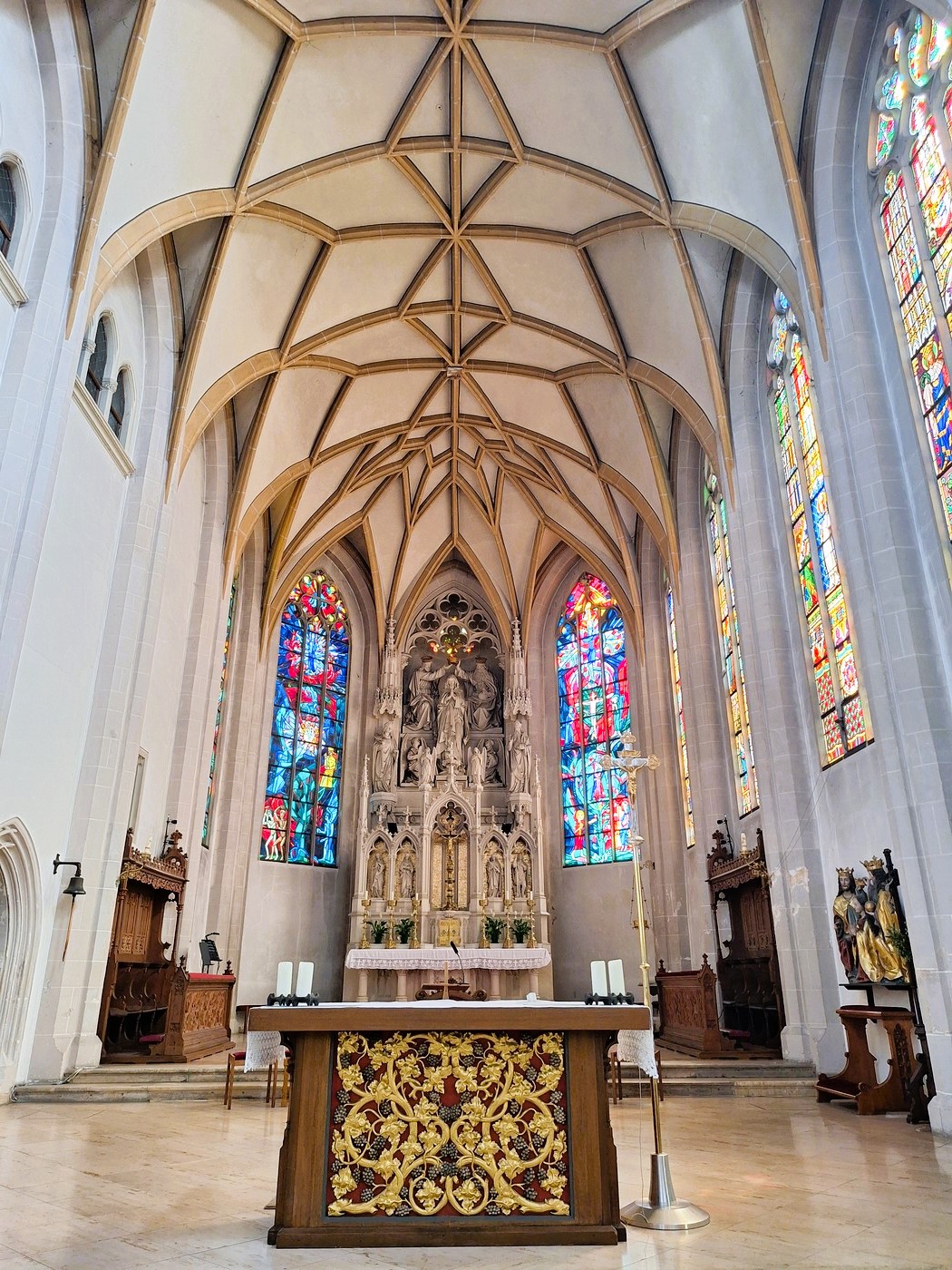
Inside, the warm wood created an inviting atmosphere. The roof structure, designed to echo Gothic rib vaulting, drew the eye upward, while the marble high altar depicting the Coronation of Mary stood out in refined splendour. Colourful stained-glass windows filled the space with light, their reflections softening the grey tones of the marble and adding to the church’s tranquil beauty.
Where history stands tall
We left the heart of the town and walked back to the place where we had landed by boat, where the small white and blue Ludwigsbahn (Ludwig Railway) was waiting. The mini train runs hourly from the Danube landing stage, taking visitors on a short ride through a few streets of the town before climbing the Michelsberg hill to the Befreiungshalle (Liberation Hall).
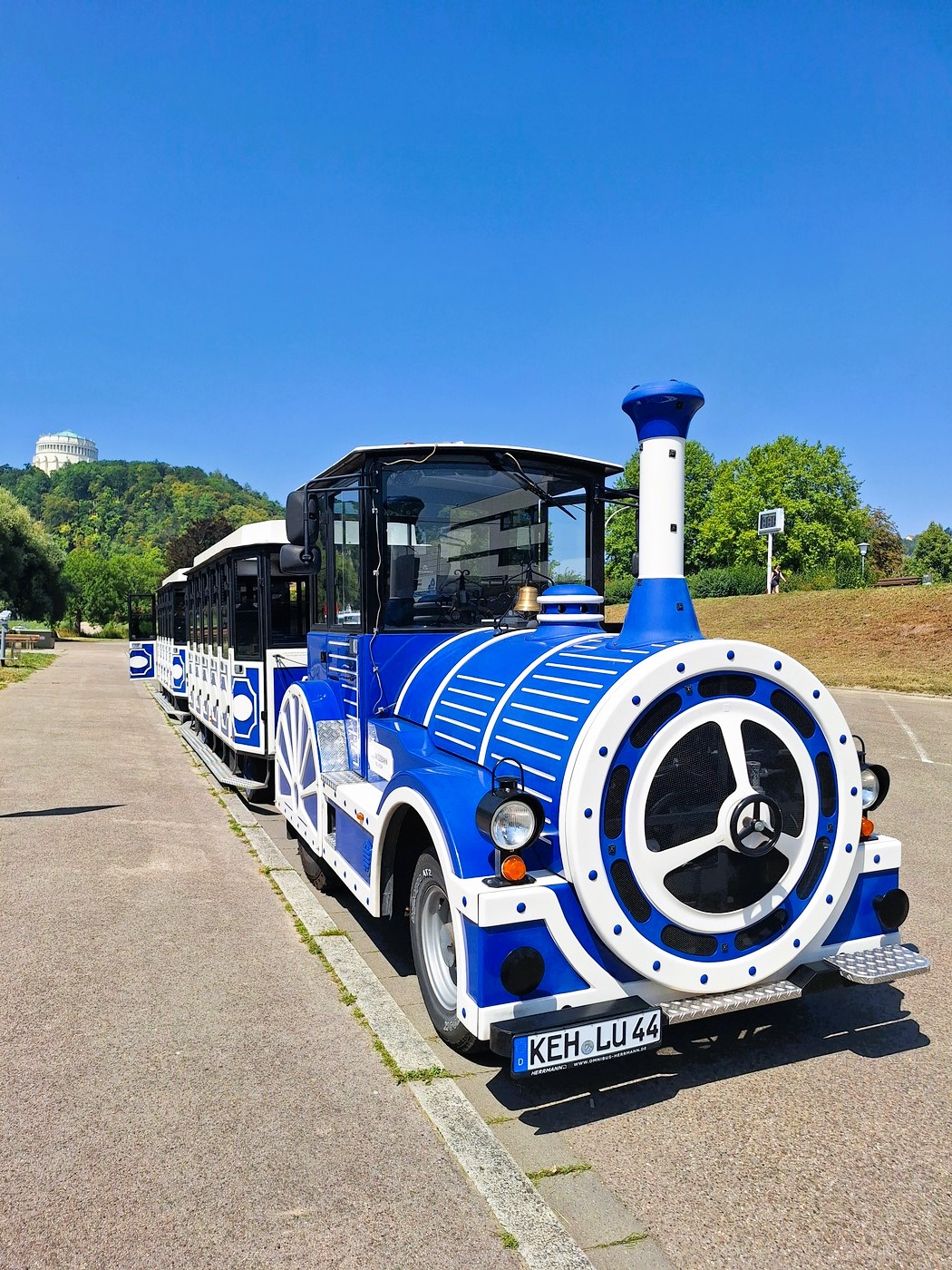
The large, round building rising high above Kelheim had already caught our eye as we crossed the Danube earlier that morning. Up close, it was even more massive and impressive. Commissioned by King Ludwig I of Bavaria to commemorate the victories against Napoleon during the Wars of Liberation (1813–1815), the Befreiungshalle combines power and elegance in equal measure.
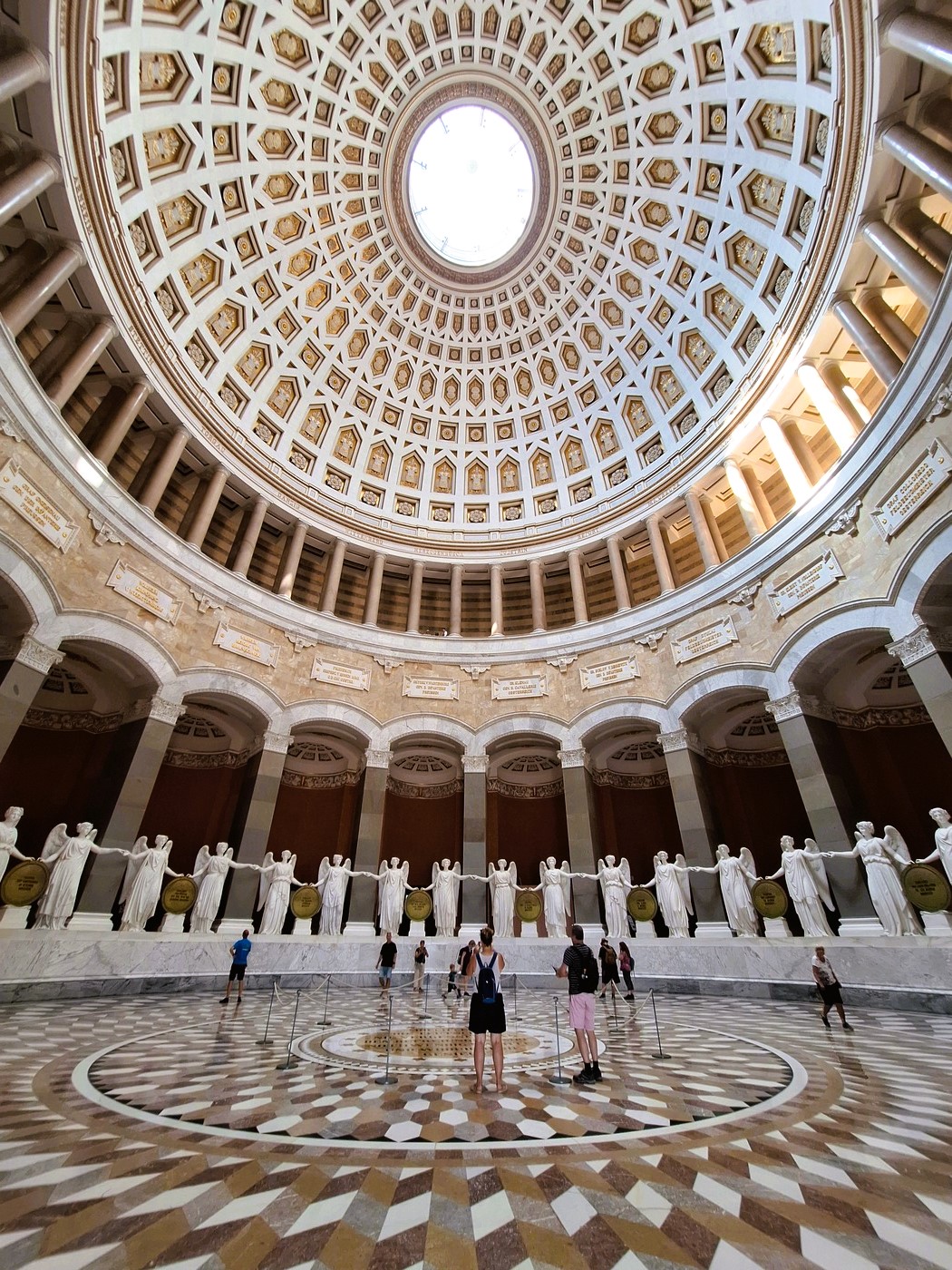
Walking inside, you immediately feel the impact of its scale. The soaring walls and perfect symmetry make you aware of your own smallness, as if the monument itself is quietly reminding you of the ambition and strength of those who built it. Inside the 18-sided rotunda, 34 marble figures of winged Victories encircle the hall, standing between bronze shields cast from captured French cannons. From the outside terrace, the view across Kelheim and the Danube valley was simply breathtaking.
Tastes of Kelheim
Before leaving for the boat back to the abbey, we returned to the heart of the town, drawn to two shops we had noticed earlier.
At Eis Café D’Isep, Kelheim’s oldest and most traditional ice-cream café, we stopped to choose from a tempting display of flavours that made it difficult to decide. We each went for two scoops of creamy ice cream, smooth and full of flavour — a great choice with a genuine, homemade taste.
A little further along, Café Markl offered an inviting selection of local cheeses, cured meats, and freshly baked bread. Remembering the bottle of wine we had brought from the fortress of Dozza, we decided to buy a few things to go with it — cheese, salami, ham, and bread; simple, local flavours to enjoy later in the quiet of the abbey.
The perfect ending
That evening, back in the abbey’s courtyard under the Bavarian stars, we opened our Monte del Re red wine, laid out the cheese, hams, salami, and bread, and raised a toast to two unforgettable days — the sacred calm of Weltenburg and the historic charm of Kelheim.
Two Days in Mainz, Germany
Early in the morning, a taxi took us from Weltenburg Abbey to Saal (Donau) train station. While we waited, we watched the longest freight train we’d ever seen rumble by, its wagons stacked with brand-new cars ready for transport. From there, we travelled back to Regensburg and caught our next train to Mainz — a four-hour ride that gave us time to rest and take in the Bavarian countryside.
Checking in: Hotel Königshof
Our base in Mainz was the Hotel Königshof, a three-star stay that couldn’t be more convenient. Located directly opposite Mainz Central Station (Mainz Hauptbahnhof), it’s ideal for travellers arriving by train — you practically step off the platform and into the lobby. The rooms were quiet, soundproofed, and blissfully air-conditioned. Its central position made exploring the city simple, with the old town, cafés, and restaurants just a short walk away.
Gutenberg Museum MOVED
As someone working in publishing, my highlight was visiting the Gutenberg Museum — or rather, its temporary home, Gutenberg Museum MOVED. The original building across from Mainz Cathedral is closed for major renovation to become the Gutenberg Museum of the Future.
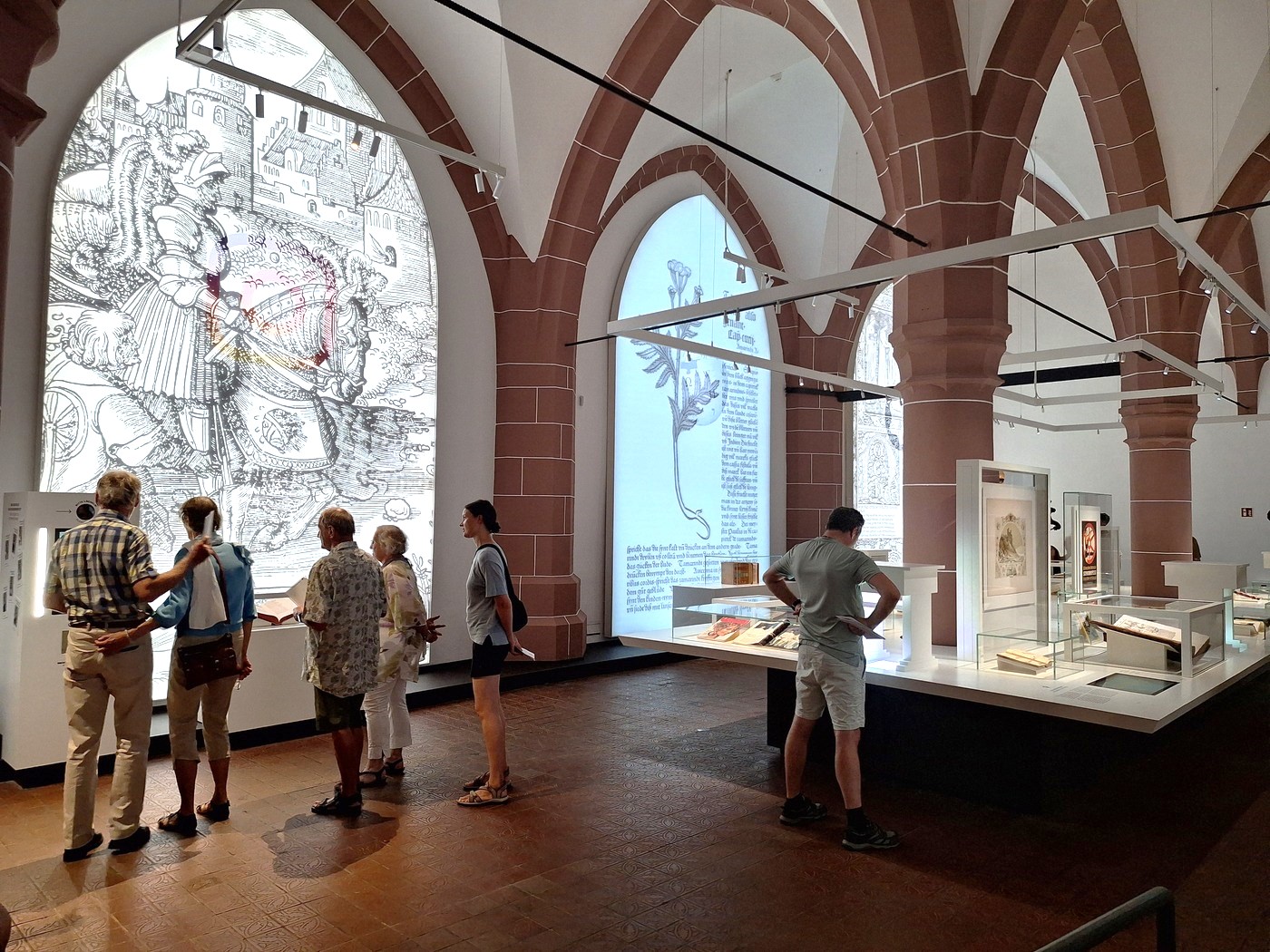
The temporary museum, now housed within the renovated Natural History Museum, turned out to be a fascinating visit. The exhibition spans three floors and traces the history of printing and media from Gutenberg’s time to the digital age. One of the first displays we encountered was a detailed city model of Mainz showing the places where Gutenberg lived and worked, complete with short animations that brought his story to life.
The main attractions, of course, are the two original Gutenberg Bibles, beautifully displayed and remarkably preserved. We also enjoyed a demonstration on a reconstructed printing press which showed us a hands-on look at how movable type, stamping, and bookbinding worked in practice.
Exploring the Natural History Museum
Since our ticket included entry to the Naturhistorisches Museum Mainz, we took the opportunity to explore — and it didn’t disappoint. It’s the largest natural history museum in Rhineland-Palatinate, featuring fossils, geological specimens, and reconstructions of extinct animals such as mammoths and sabre-toothed cats.
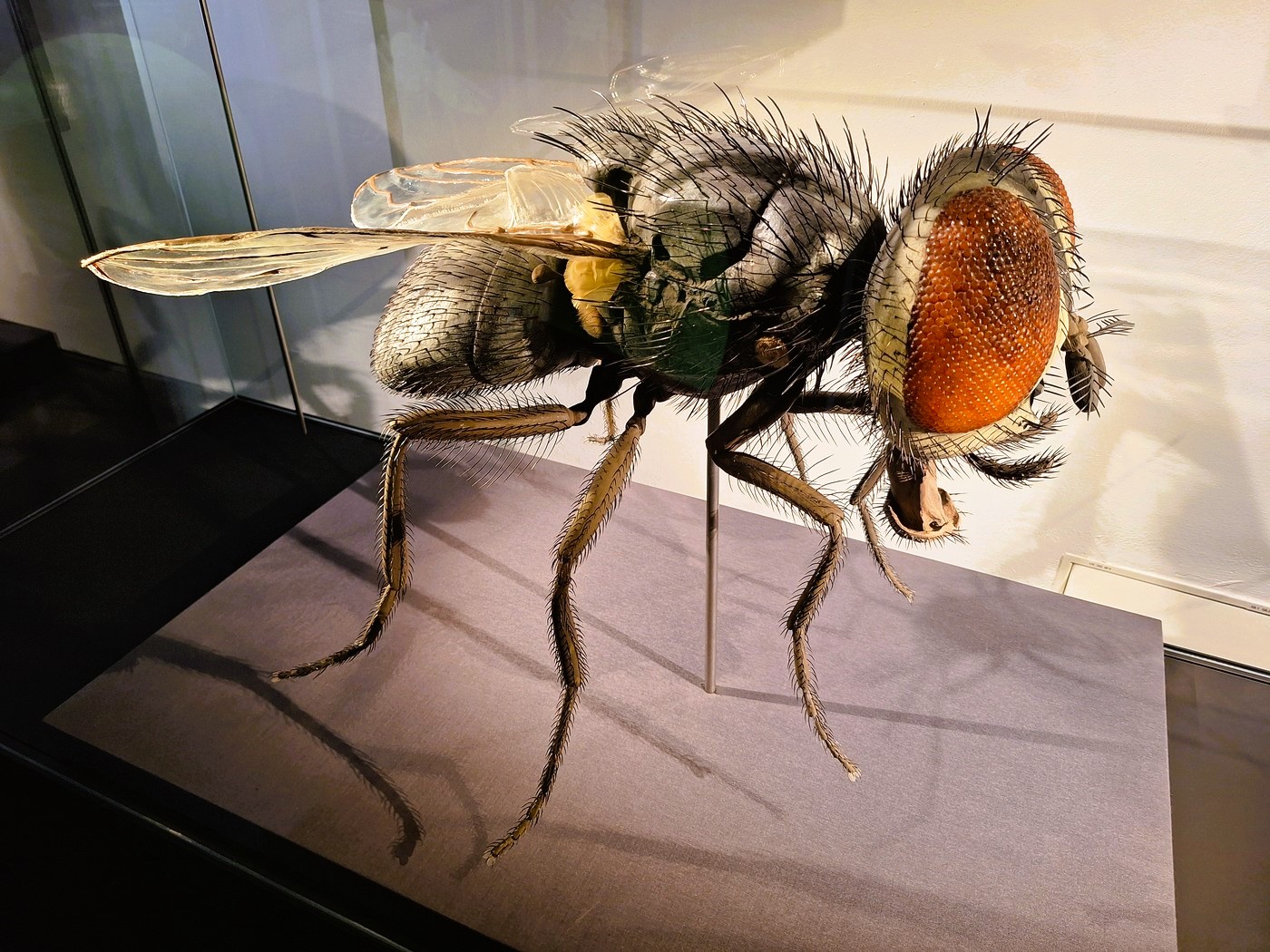
The live exhibits were especially engaging: terrariums with mantises and other insects, and even a working bee-hive, where bees buzzed in and out through a small wall opening — a clever and educational touch.
Evening in the old town
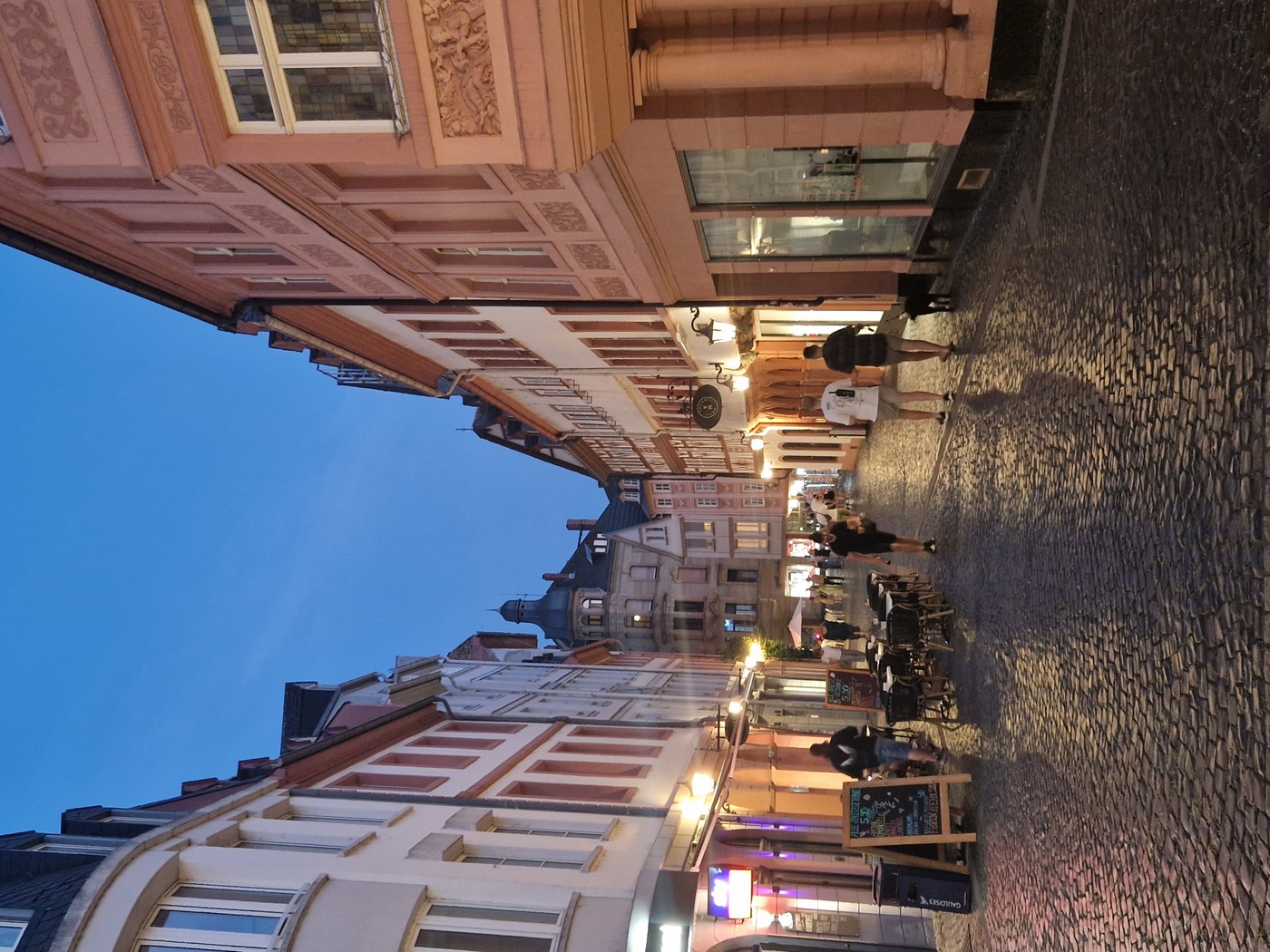
After a late lunch near the hotel, we took a short rest before heading out for an evening walk. Mainz’s Altstadt (Old Town) is full of character, with narrow lanes, small boutiques, and a relaxed local atmosphere. We reached Gutenbergplatz, the lively square in front of the State Theatre, just a few minutes from the cathedral. The area was buzzing with life — cafés filled with people, conversations spilling into the streets, and the air rich with the smell of food.
We eventually found a table at ALEX Mainz, a lively restaurant popular with both locals and visitors. The atmosphere was cheerful and easy-going — the perfect way to end the day. I ordered Chicken Teriyaki, while Jason went for an ALEX Cheeseburger. The food took its time, but mocktails (for me) and whisky (for him) made the wait enjoyable.
Ending our holiday in style
We spent the next day in Speyer, about an hour away by train, exploring the impressive Technik Museum and its many wonders. Returning to Mainz in the evening, we decided to end our trip on a high note with dinner at Adam & Eden, the elegant restaurant inside the AC Hotel, conveniently just a few steps from where we were staying.

The setting was refined yet welcoming, and the service excellent. I ordered Atlantic Turbot served with grilled vegetables, red onion cracker, and saffron foam, while Jason chose a US Flank Steak with port wine jus and fermented black garlic. For dessert, I went for a classic crème brûlée, and he enjoyed lemon sorbet with mint and red berries — the perfect finale to two memorable days in Mainz.
Journey’s end
The following morning, we took a short half-hour train ride from Mainz Central Station to Frankfurt Airport, ready to board our flight home to Malta. Fulfilled, a little tired, and full of stories, we both agreed it had been an unforgettable train adventure — and we were already thinking about where the next one might take us.
Speyer: Giant Machines, Space Dreams and a Touch of Childhood
Just an hour away by train, the ride from Mainz to Speyer Hauptbahnhof was short and comfortable. From the station, a quick taxi ride brought us straight to our destination for the day — the Technik Museum Speyer, a place that’s hard to describe without simply saying wow.
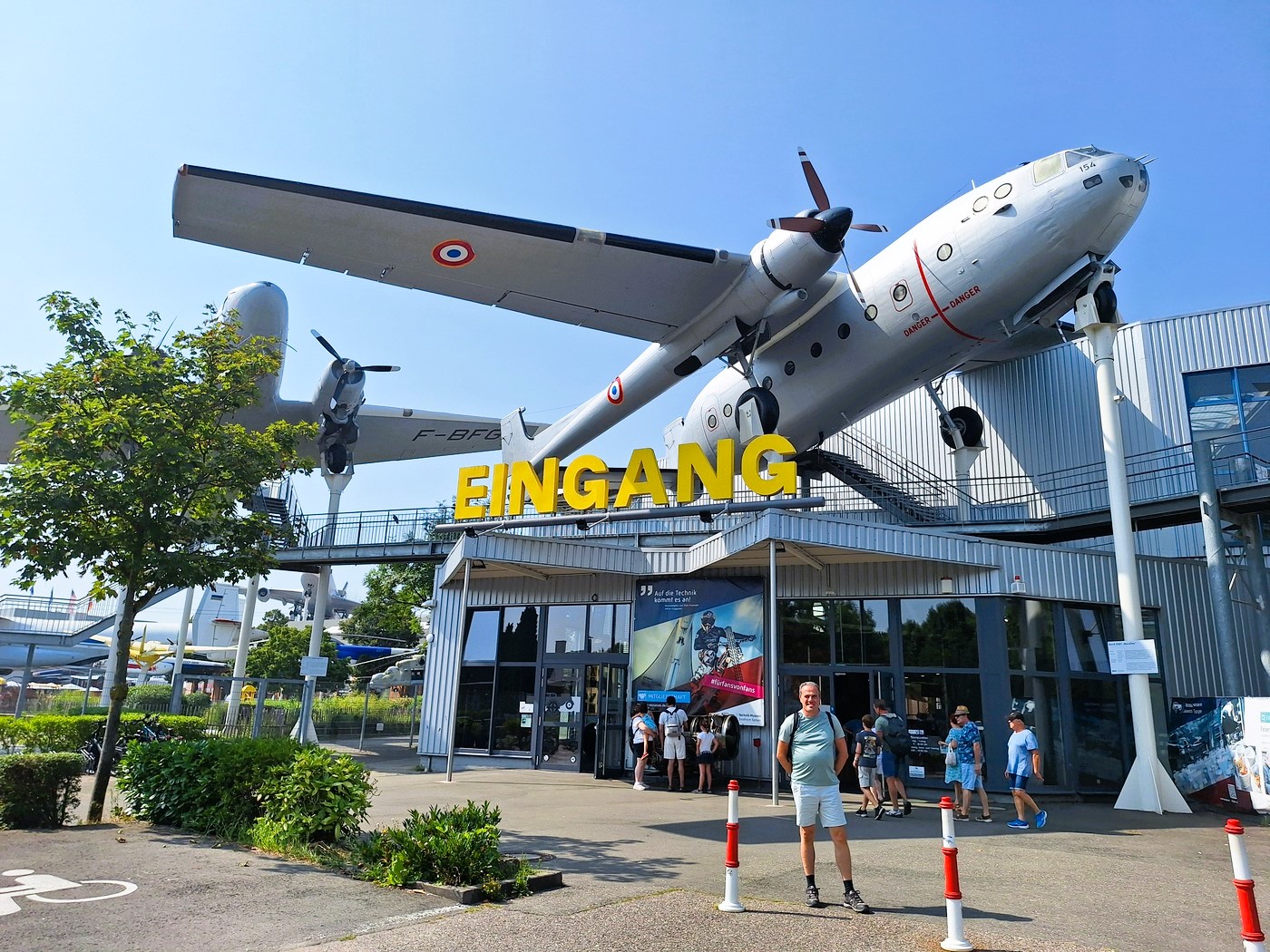
A playground of technology
Spread over more than 150,000m², this museum is a dream come true for engineers, aviation fans, and the simply curious. My husband, being an engineer, was in his element, but even I couldn’t help being amazed. The museum invites you to climb, touch, and explore. It’s an experience rather than a display.
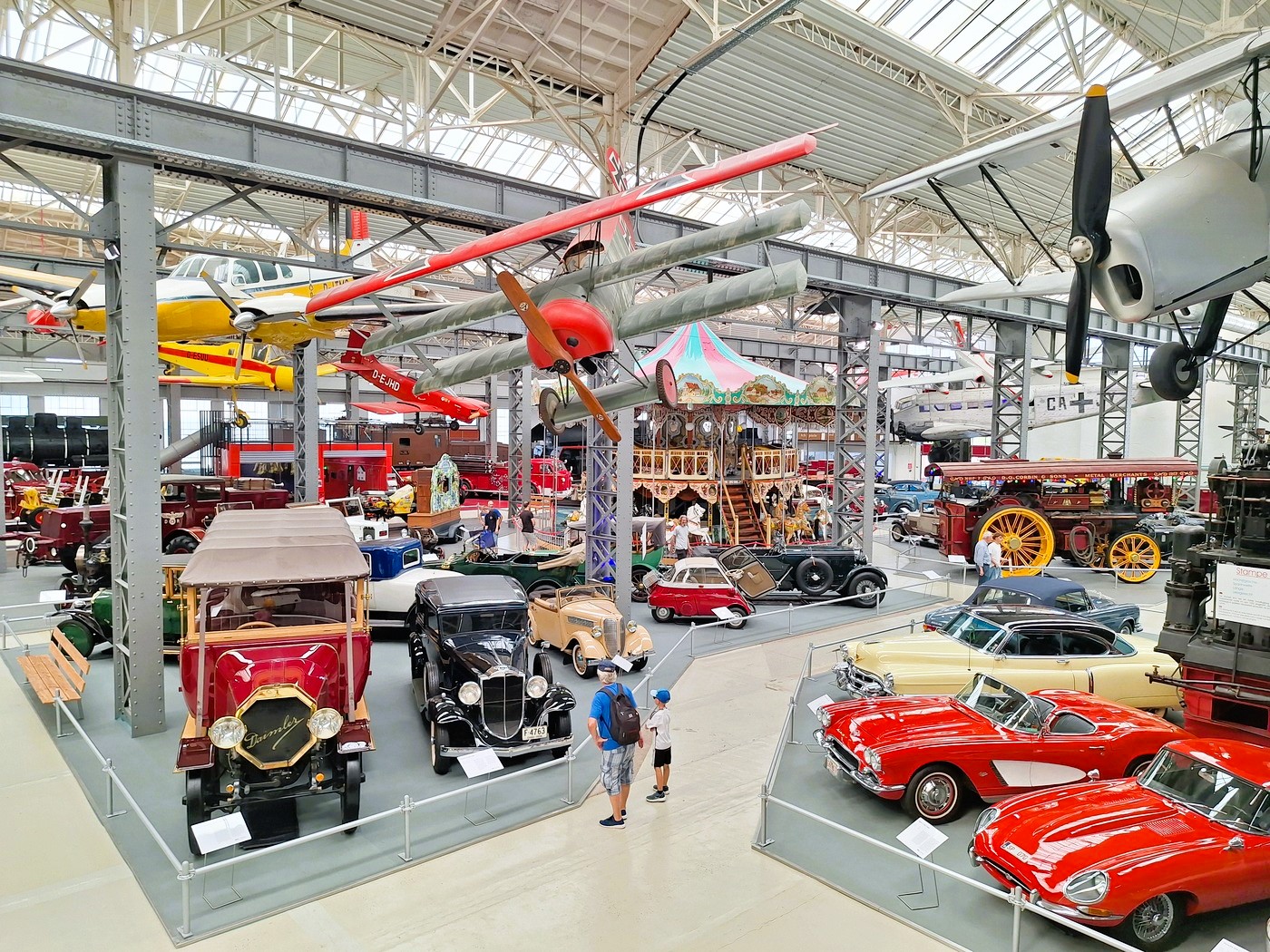
Inside, we wandered among vintage automobiles, gleaming locomotives, antique fire engines, and the enormous Welte Philharmonic Organ, which still plays on its own. One of my favourite discoveries was the two-storey carousel, crafted around 1890 and wonderfully preserved. Its carved wooden horses, shining brass poles, and the cheerful melodies of the old Bruder organ made the whole scene feel like stepping back into childhood.
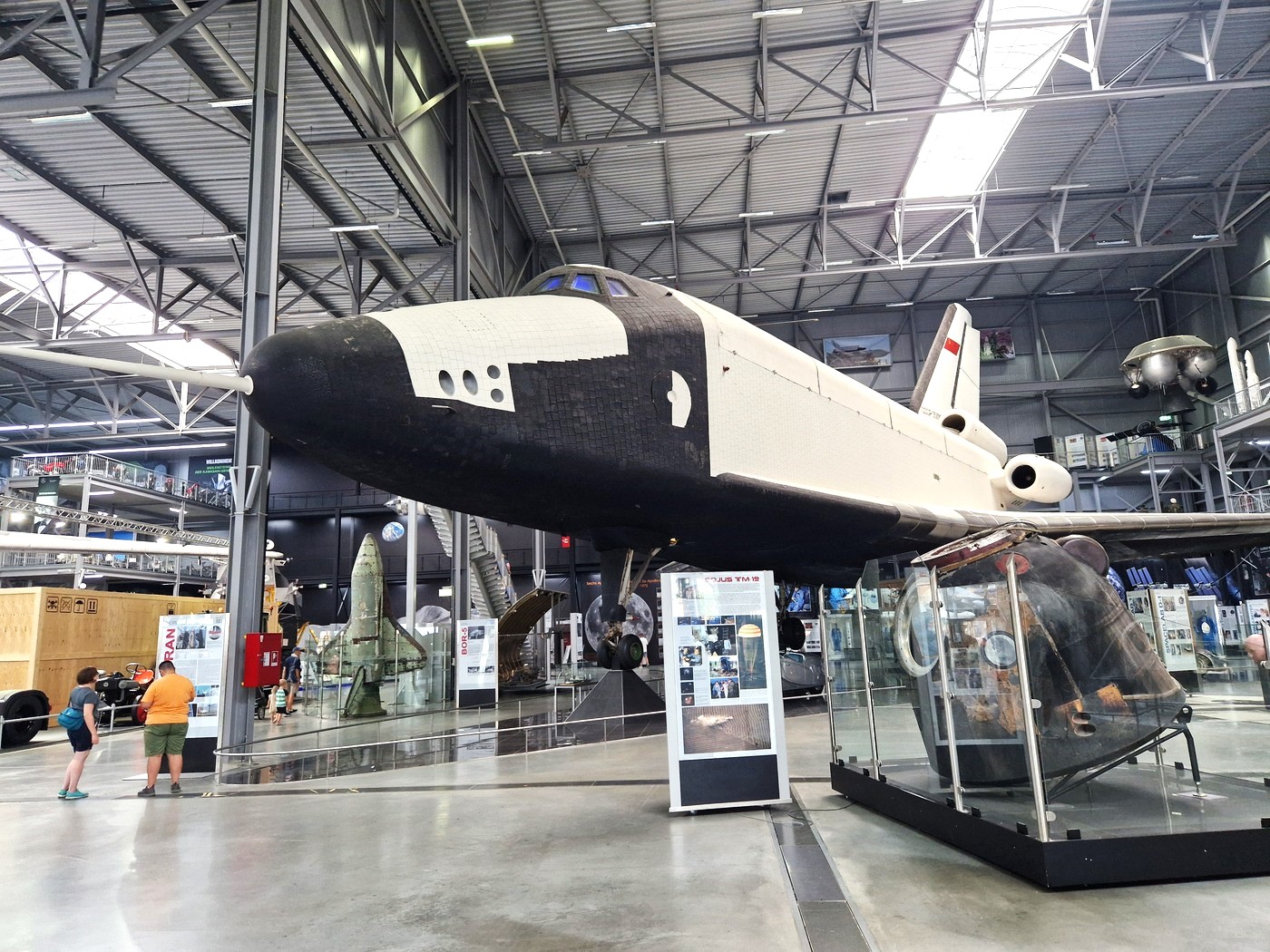
My husband was most captivated by the Buran, the Soviet space shuttle, an astonishing sight and easily one of the museum’s star attractions. Seeing it up close was a vivid reminder of just how daring, imaginative, and international the race for space once was.
The exhibits extend outdoors too, where full-sized aircraft and submarines dominate the skyline. We walked inside a German Navy submarine (U-9) — fascinating, though admittedly a bit claustrophobic. Then we stepped into the Soviet Antonov An-22, an enormous transport aircraft with an impressively spacious interior. Standing nearby was a medium Soviet transport helicopter, perched high off the ground. Standing inside it, looking through the open cockpit, really gave the feeling of being mid-air. Another highlight was the Messerschmitt Bf 109 G-4, a World War II fighter plane that drew plenty of attention from aviation enthusiasts.
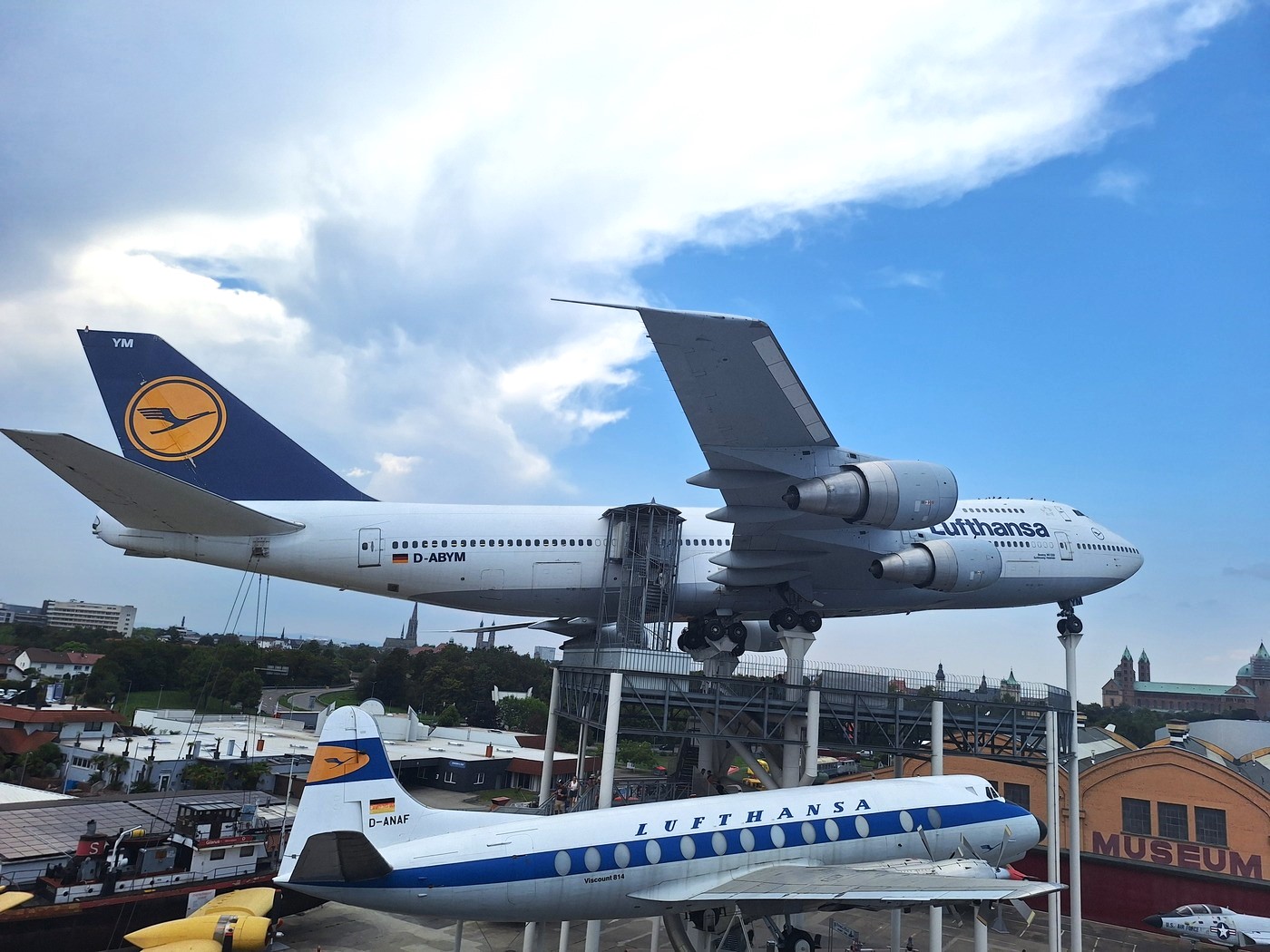
The museum’s star attraction is without question the Lufthansa Boeing 747-230 mounted 20m above the ground. You climb a long staircase to the cabin, explore the cockpit, and then — the best part — slide down a long-enclosed tube slide back to the ground!
The IMAX Dome
By midday, we took a break to watch a film in the IMAX Dome, located on the museum grounds. The curved screen wraps around you, creating an immersive experience that feels almost 3D without glasses. We watched Journey to the South Pacific, a stunning underwater documentary about coral reefs and marine life in Papua New Guinea — the dome made it feel like we were swimming with the fish ourselves.
It’s a good thing the museum also has a restaurant, perfect for grabbing a meal and a drink before continuing to explore.
A day well spent
After hours of discovery and countless photos, we made our way back to Mainz — tired, happy, and amazed by everything we’d seen.